August 25th, 2025
8 min readHow Industrial Automation Is Changing Warehouse Operations in 2025
Warehouse leaders are turning to industrial automation not just to survive but to thrive. The question is no longer “Should we automate?” but “What’s the smartest way to do it?”
Warehouses Are No Longer Just Boxes with Racks
The role of the warehouse has changed – and the transformation is accelerating.
What used to be a static, labor-driven back-end operation is now a dynamic performance center at the heart of the supply chain. And the transformation is only accelerating.
With increasing pressure from e-commerce, labor shortages, SKU proliferation, and consumer expectations for faster delivery, warehouse leaders are turning to industrial automation to increase operational efficiency. The question is no longer “Should we automate?” but “What’s the smartest way to do it?”
If you’re still relying on spreadsheets, clipboards, and a dozen forklifts to move product, you’re already behind. But the good news? It’s not too late to catch up if you take a strategic approach.
How Industrial Automation Is Changing Warehouse Operations in 2025
- Why Industrial Automation is Gaining Ground
- Beyond the Buzzwords: What is Industrial Automation?
- How is Industrial Automation Elevating Human Warehouse Jobs?
- What Makes Automation Work? It’s Not Just Hardware
- Why Automation Isn’t Just for the Giants Anymore
- Why Are Companies Making the Leap Now?
- Don’t Just Buy Tech – You Need to Build a Strategy
Final Thought: From Frustration to Flow
1. Why Industrial Automation Is Gaining Ground
Automation delivers measurable results at scale.
There’s a reason automation is dominating industry discussions. Traditional manual processes simply can’t keep pace with the scale, speed, and precision that modern warehousing demands; and in 2025, the operational pressures aren’t theoretical, they’re measurable.
Most warehouse operators are dealing with a combination of labor availability issues, rising operational costs, and growing order complexity. We’ve entered an era where picking accuracy, real-time inventory visibility, and same-day shipping aren’t differentiators – they’re expectations. The faster you move to address these friction points, the more competitive you’ll become.
Industrial automation directly addresses these challenges by enhancing process reliability, throughput consistency, and adaptability. Whether it’s a robotic shuttle system retrieving totes from high-density storage or an autonomous mobile robot (AMR) navigating a dynamic pick floor, automation delivers measurable results at scale.
2. Beyond the Buzzwords: What is Industrial Automation?
Industrial automation is a layered technology toolkit based on the needs of your operation.
Despite the hype, industrial automation isn’t some futuristic, one-size-fits-all solution; it’s a toolkit, a layered set of technologies that can be deployed based on the unique needs of your operation. And when it’s engineered well, it works with your people, not against them.
Most modern warehouse automation strategies are built around a few core elements. One of the most visible is the automated storage and retrieval system (ASRS), which uses cranes, shuttles, or autonomous case-handling robots (ACRs) to place and retrieve products from racking. This allows for dramatically higher storage density while reducing the travel time associated with manual picking.
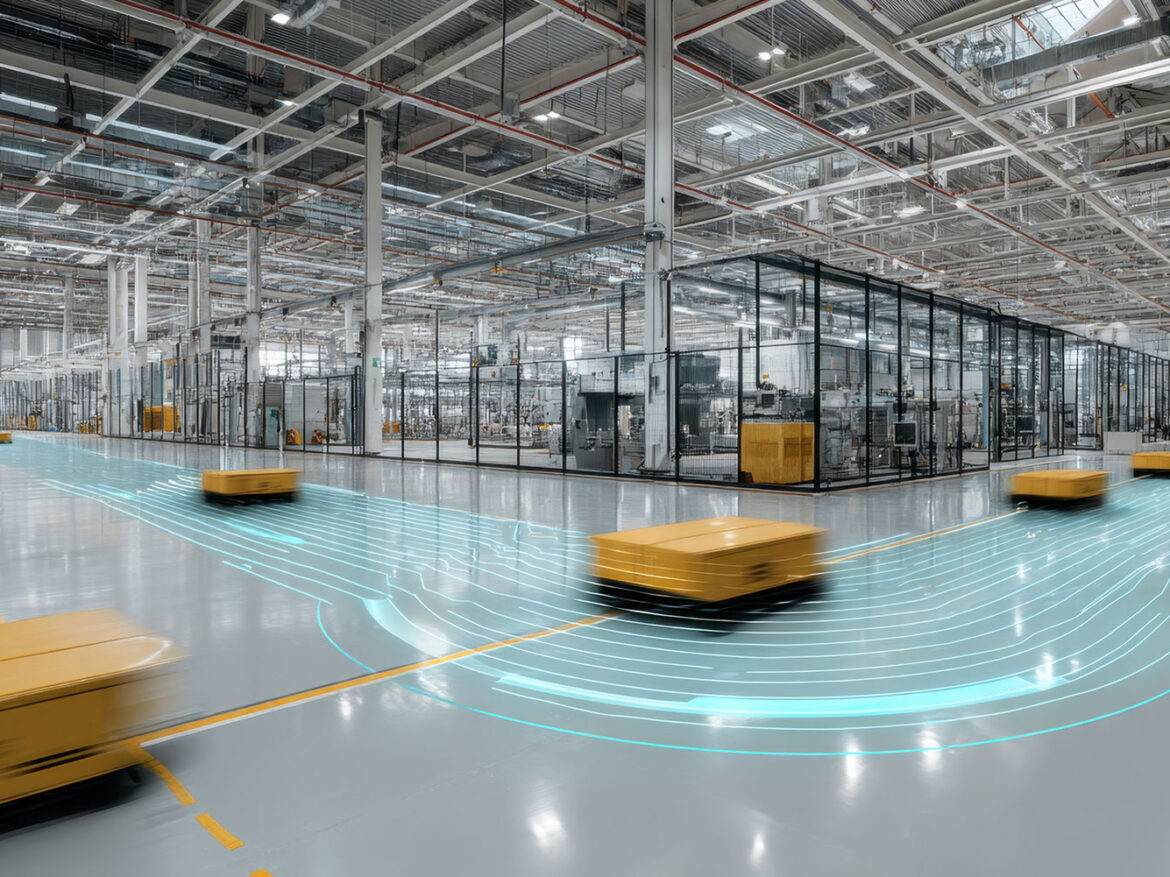
Another rapidly evolving component is AMRs. Unlike their older counterparts; automated guided vehicles (AGVs),which followed fixed paths, today’s AMRs are smart. They use sensors, vision systems, and AI to navigate real-world warehouse conditions, rerouting on the fly as conditions change. They’re already being used to shuttle goods between receiving, picking, packing, and staging areas with high efficiency.
Other automation systems include robotic palletizers that build consistent loads without injury risk and automated print-and-apply labelers that eliminate manual scanning or rework. Each one solves a specific bottleneck and scales with demand.
3. How is Industrial Automation Changing Human Warehouse Jobs?
Human workers are being reallocated to more valuable roles.
There’s a persistent fear that automation eliminates jobs. That’s not what’s happening in real warehouses.
In most deployments, automation doesn’t eliminate jobs—it strategically reallocates workers to more valuable roles. Workers are shifted from repetitive, injury-prone tasks like walking and lifting to more valuable roles like exception handling, maintenance, and quality assurance. Machines handle the muscle; the people handle the complexity.
In fact, automation makes warehouse jobs better. It reduces physical strain, minimizes seasonal burnout, and provides cleaner, safer, more consistent work environments. For companies struggling to recruit and retain talent, that’s not just a nice-to-have option, it’s a business advantage.
4. What Makes Automation Work? It’s Not Just Hardware
True operational transformation comes from smart integration.
Many failed automation projects have one thing in common: they treated the technology as the solution, instead of part of the solution.
True operational transformation comes from smart integration. That means pairing automation with warehouse management systems (WMS), warehouse control systems (WCS), and performance analytics tools that allow you to monitor, adapt, and refine your processes in real time.
For example, a robotic picking arm is only as effective as the software telling it what to pick, when to pick it, and where it goes next. If your WMS isn’t orchestrating inventory in a way that maximizes robotic efficiency, the system won’t deliver its full value.
That’s why companies who treat automation as a “bolt-on” usually miss the mark. Success comes from designing the warehouse as a system, where people, processes, software, and machines work together. That kind of orchestration takes more than a product catalog. It takes a partner who understands how it all fits together.
5. Why Automation Isn’t Just for the Giants Anymore
Solutions today are modular, scalable, and increasingly affordable.
There’s a misconception that automation only makes sense for Fortune 500 distribution centers. Technology has evolved. Solutions today are modular, scalable, and increasingly affordable.
For example, a mid-sized operation can start with AMRs for zone-based picking, then add a vertical lift module (VLM) for slow-moving inventory. Later, they might layer in robotic palletizing to reduce dock congestion. Each phase builds on the last.
And thanks to models like Robotics-as-a-Service (RaaS), facilities can deploy solutions with lower upfront capital and predictable monthly costs. That financial flexibility is opening doors for smaller operations that never considered automation before.
The key is having a roadmap, not just a wish list. That’s where the right integration partner makes the difference – someone who can guide your automation roadmap and deliver results in real operational terms.
6. Why Are Companies Making the Leap Now?
What’s driving investment? Measurable outcomes.
Warehouse automation improves accuracy, speed, and reliability, all of which directly impacts on customer satisfaction and cost-per-order. In a competitive landscape, that margin of difference can determine who wins the business and who loses it.
We’ve seen firsthand what happens when the right system is matched with the right operational challenge. Error rates drop. Throughput increases. Labor pressure eases. And perhaps most importantly, operators gain confidence in their ability to scale without chaos.
But the transformation doesn’t start with a robot. It starts with the right plan and the right team to execute it.
7. Don’t Just Buy Tech – You Need to Build a Strategy
First thing you need to ask, “What problem are we solving?”
Too many automation projects fail because they begin with the question, “What should we install?” That’s the wrong place to start. The better question is, “What problem are we solving?”
At IndPro, we’ve helped clients identify bottlenecks they didn’t even know were costing them money. We’ve designed systems that account for long-term growth, not just short-term relief. And we’ve seen what happens when automation is rolled out without the planning or accountability to back it up.
Phased rollouts, cross-trained teams, software integration, KPI-driven evaluation, these aren’t nice-to-haves. They’re the foundation of a successful automation project. And we don’t believe in handing that over to chance.
Final Thought: From Frustration to Flow
Hands-on leadership. Accountable partnerships. Measurable results. All backed by IndPro Expertise.
The warehouse is no longer a static cost center. It’s a high-performance operation with measurable impact on customer experience, profitability, and agility. Automation is how you unlock that potential, but not with off-the-shelf fixes. With the right plan, the right systems, and the right partner in your corner.
That’s where IndPro comes in.
IndPro is more than a vendor; we’re a trusted partner in warehouse automation. With a decades-long track record delivering complex automation solutions across the globe, we bring hands-on leadership, deep industry experience, and a commitment to measurable results.
Our senior-led teams engineer solutions that solve real operational problems, not just theoretical ones. If you’re looking for a partner who owns the outcome and delivers excellence end-to-end, IndPro is built for you.
Contact a systems integration expert today, we’re committed to helping optimize your operations and drive long-term success.
Automate. Evolve. Succeed.
About IndPro
IndPro Services, a leader in Commercial Systems and U.S. Federal Government procurement, designs and executes successful, data-driven automation and robotic solutions for supply chain industries.
Dedicated to improving efficiency in warehouse and distribution center operations, we work on the same side of the table with you to procure the best possible solution, tailored to your budget and needs.