May 11th, 2026
7 min readDigital Twins and Simulation, De-risking Automation Before You Buy and Go Live
A digital twin can de-risk automation by 30-50% before purchase and live deployment.
Leveraging virtual validation to de-risk deployment and optimize capital.
Implementing digital twins simulation provides a clear, reliable pathway for de-risking automation before you buy and before you go live. Every large-scale infrastructure deployment carries systemic deployment risks that can disrupt existing operations or delay production timelines if they are not addressed early.
Virtual models can drastically lower deployment variable risks by 30-50% before the physical installation process – potentially saving millions in capital. We prioritize these advanced modeling methodologies to give your team complete certainty during major technical transitions.
Executive Summary
Deploying high-scale automation requires absolute mathematical certainty before capital is committed. By establishing an enterprise intralogistics simulation framework, operators can thoroughly validate equipment configurations and software logic prior to physical installation. This technical approach eliminates integration bottlenecks, protects capital expenditures, and ensures predictable operational throughput from the first day of live operations.
Key Takeaways
- Virtual prototyping isolates system bottlenecks prior to procurement.
- Real-time data integration validates software logic to eliminate post-go-live disruptions.
- Predictive modeling optimizes long-term capital allocation across multiple facilities.
- Managing operational friction in large-scale deployments.
- What is a digital twin in supply chain intralogistics?
- How does a digital twin work?
- Testing and optimizing workflows in a zero-risk virtual environment.
- Transitioning from reactive to predictive supply chains.
- The strategic advantage of digital twin simulation in warehouse automation.
- Get in Touch
Managing operational friction in large-scale deployments.
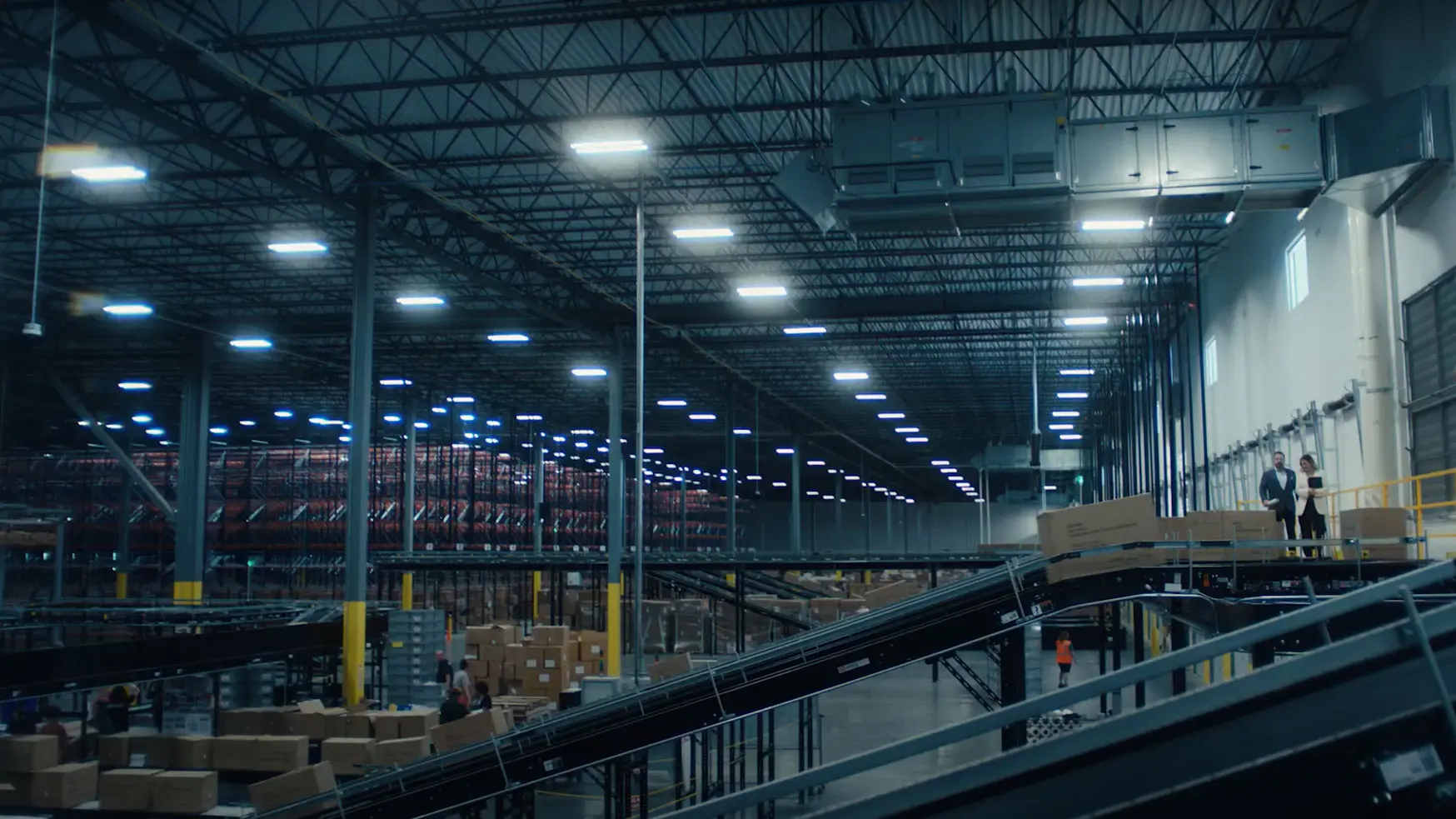
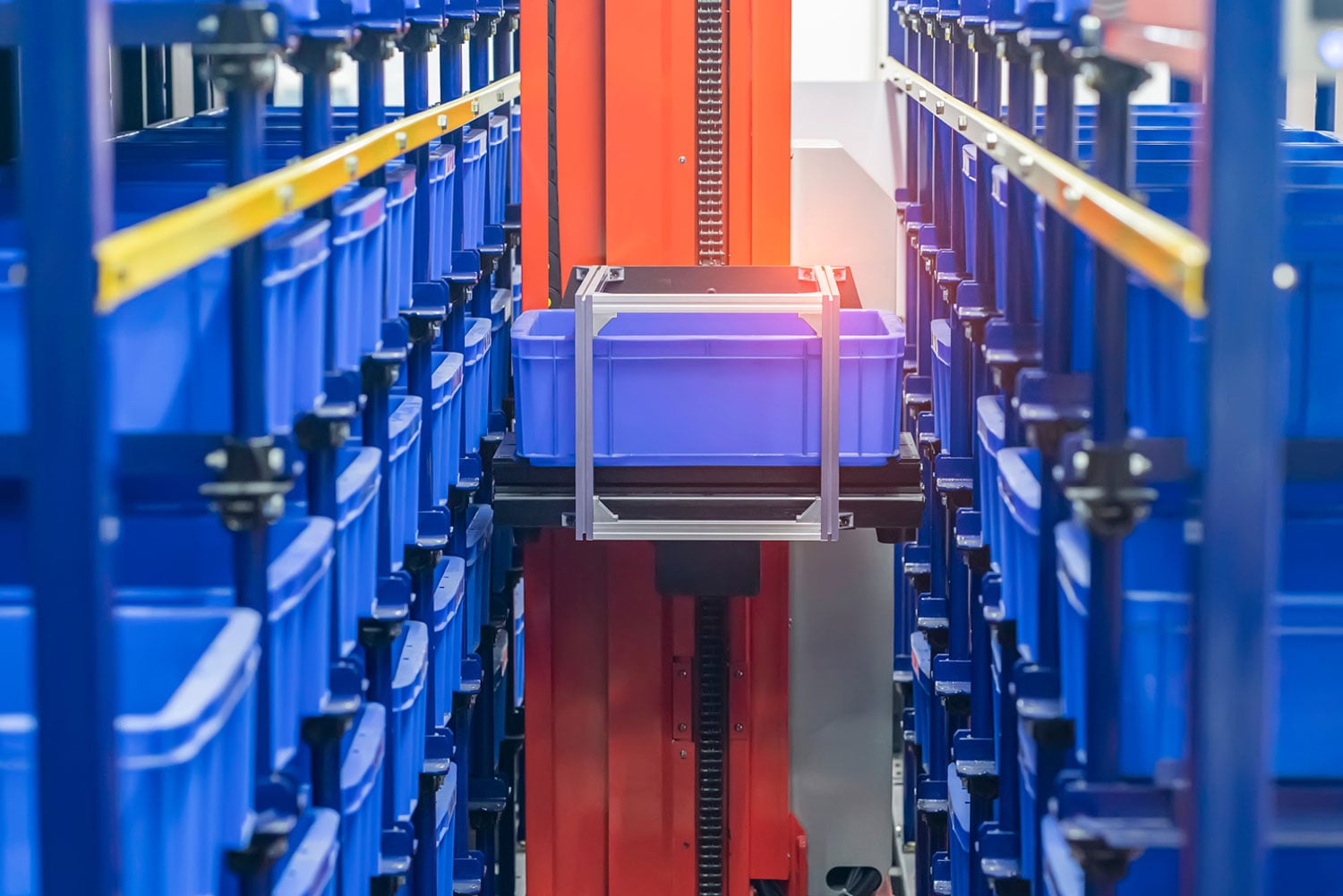
High-volume fulfillment environments require perfect synchronization between separate mechanical systems and multi-layered software architectures. The real challenge occurs when your warehouse management system attempts to orchestrate thousands of concurrent tasks across autonomous mobile robotics, automated storage and retrieval systems, and high-speed conveyor lines. If these components are only tested as isolated units, massive processing latencies and physical jams frequently emerge during peak volume periods.
Our approach as a systems integrator focuses on evaluating these sub-systems as a single, interdependent network. We utilize advanced physics-based industrial digital twins to create a live testing laboratory, combining physical characteristics, operational rules, and execution code to reveal how the facility handles erratic, real-world constraints. This comprehensive assessment provides empirical proof of system capacity before any field construction begins.
What is a digital twin in supply chain intralogistics?
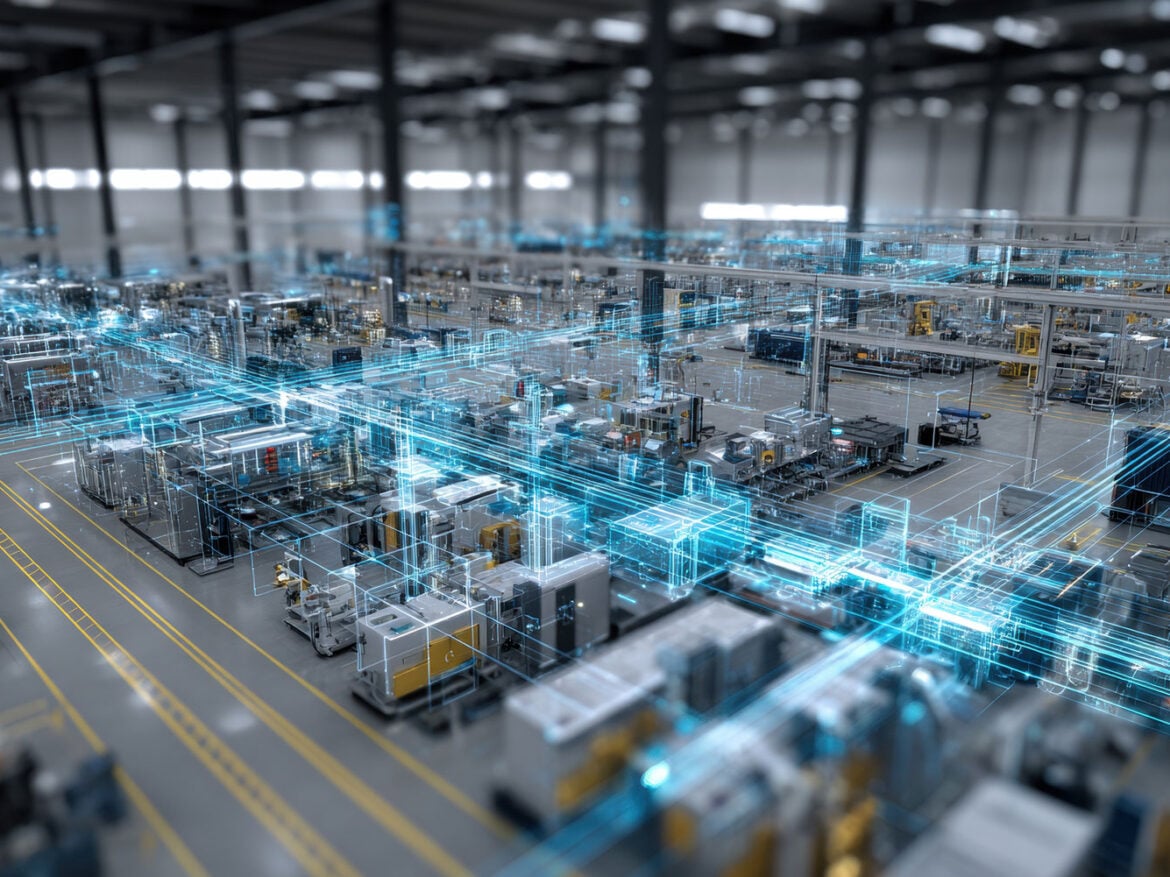
A digital twin in supply chain intralogistics represents a completely connected digital model of a physical fulfillment or distribution ecosystem. This intelligent digital replica isn’t a static graphic or a simple standalone design. It’s a dynamic 3D simulation that mirrors physical assets, conveyor networks, robotic cells, and human workflows.
In modern global warehouse management, this technology serves as a strategic driver of innovation. It provides a simulated engineering environment where teams can evaluate complex warehouse material flows under varied operational variables. By creating a virtual warehouse replica, we establish a baseline for extensive logistics process modeling.
This virtual environment allows operations leaders to visualize how distinct sub-systems interact long before any hardware arrives at the site. It translates abstract engineering data into a highly visual, mathematically sound representation of the entire facility, ensuring scalable warehouse automation validation. You’ll see exactly how inventory moves through every touchpoint before spending capital.
How does a digital twin work?
The core of this architecture relies on real-time data integration from multiple operational layers. The system ingests historical and live Warehouse Management System (WMS) data alongside Warehouse Control System (WCS) optimization protocols. By executing a complex WMS WCS digital twin integration, the model mirrors the precise execution rules of your actual facility. It combines these software rules with real-time IoT sensor data and automated machinery simulation variables. This fusion creates what engineering teams refer to as warehouse nervous systems.
The resulting model doesn’t just display shapes moving on a screen. It processes actual order profiles, physical acceleration rates, and equipment constraints to perform live performance analysis. Through daily continuous monitoring, the software tracks deviations between virtual predictions and physical outputs. This constant feedback loop refines the accuracy of the model, allowing it to predict warehouse behavior with exceptional precision during the warehouse operation phase. It’s how we ensure the digital model perfectly matches reality.
Testing and optimizing workflows in a zero-risk virtual environment.
Large-scale distribution facilities cannot afford to test operational extremes during live production. A warehouse digital twin allows for comprehensive activity peak simulation without risking actual client service level agreements. Operations managers can systematically introduce artificial strain through breakdown scenario testing to observe how the entire network responds. For example, we can simulate a complete sorter failure during peak volume to evaluate how the control software reroutes inventory.
This level of early failure detection ensures that recovery protocols are programmed and verified long before the physical go-live date. Testing software updates or structural layout changes within this disruption-free simulation eliminates the traditional trial and error approach on the warehouse floor. It provides a reliable mechanism for business resilience optimization, protecting the enterprise from catastrophic software lockups or physical gridlocks. You don’t have to guess how your system handles stress when you’ve already proven it virtually.
Transitioning from reactive to predictive supply chains.
Transitioning from reactive to predictive supply chains requires moving the optimization timeline upfront. Traditional fulfillment operations rely on reactive management strategies to address daily bottlenecks and staffing shortages. Utilizing an upfront virtual twin shifts the focus toward proactive operational balancing before a single piece of equipment is installed.
An intelligent proactive dashboard provides supervisors with forward-looking visibility into upcoming shifts based on real-time operational throughput forecasting trained on simulated data. This continuous alignment between virtual predictions and physical execution maintains steady material flows throughout the day. It transforms the warehouse from a series of isolated automated systems into a highly synchronized, responsive asset that adapts to changing order profiles instantly. We’ve seen how this upfront visibility reduces operational stress and stabilizes daily throughput.
The strategic advantage of digital twin simulation in warehouse automation.
Investing in an advanced validation strategy changes how capital allocation decisions are made across an organization. When designing an intralogistics project, executives shouldn’t rely on theoretical throughput metrics or static product descriptions. Instead of relying on rigid hardware specifications, partnering with an expert systems integrator allows you to validate custom configurations dynamically through a digital twin.
This rigorous virtual simulation directly drives capital expenditure optimization in fulfillment and distribution automation by preventing over-engineering and under-specified equipment procurement. The insights gained during the digital twin validation phase directly accelerate physical equipment deployment speed. Because the software integration and physical pathing are already resolved in the virtual model, field engineers spend less time troubleshooting on-site. This enhanced execution quality ensures that projects meet deadlines and maximize warehouse productivity immediately upon activation. It’s a structured approach to protecting your automation investments.
Get in Touch
IndPro helps you achieve long-term operational stability through digital twin validation.
Managing the complexities of large-scale material handling deployments requires a partner who provides rigorous virtual validation alongside hands-on engineering expertise. We’re here to help our clients eliminate deployment risks, optimize capital investments, and seamlessly synchronize systems.
Get in touch with our specialists to discuss how we can stabilize and scale your facility’s real-time execution through senior-led execution and absolute operational accountability.
IndPro Services
Since 1990, IndPro specialists have been helping warehouse and distribution leaders turn technical complexity into operational certainty. Whether you are navigating the selection of a new software layer, integrating advanced robotics, or stabilizing the performance of a high-throughput distribution network, IndPro brings senior-led execution to every phase of the lifecycle. As a leader in material handling automation, we remain accountable to the measurable results that ensure your systems support long-term growth and sustained efficiency.
Automate. Evolve. Succeed.
Hands-on leadership. Accountable partnerships. Measurable results.