May 25th, 2026
8 min readAI in Warehouse Operations: Practical Use Cases that Improve Speed and Accuracy
Learn how to boost warehouse speed and accuracy with practical AI use cases that optimize operations.
Deploying AI in supply chain management for enterprise fulfillment velocity.
The modern distribution network requires a shift from reactive management to predictive orchestration. Using AI in warehouse operations, practical use cases that improve speed and accuracy are no longer speculative theories – they are operational imperatives for enterprise leaders managing complex global networks. Gartner reports that over 75 % of supply chain organizations have already invested in some form of AI-enabled analytics.
Industry research underscores this transition. According to McKinsey, AI-powered demand forecasting can reduce forecast errors by 20-50%, directly improving inventory availability and customer service levels. Furthermore, McKinsey data indicates that predictive maintenance reduces unplanned downtime by 30-50 % and lowers maintenance costs by 10-40 %. Supporting this trajectory, Gartner reports that AI-enabled route optimization reduces transportation costs by 8-12 % while improving on-time delivery performance.
Implementing these advanced systems requires deep infrastructure readiness, targeted automation data discipline, and a specialized integration approach.
Executive Summary
Implementing AI within high-scale fulfillment networks transitions warehouse operations from manual guesswork to automated, data-driven precision. By focusing on high-signal practical use cases, enterprise networks can achieve verifiable improvements in throughput velocity and order accuracy. Successful deployment relies on aligning advanced algorithms with existing physical infrastructure through specialized systems integration.
Key Takeaways
- Predictive workflows eliminate systemic operational bottlenecks.
- Data integrity dictates the ultimate return on automation investments.
- Phased roadmap execution mitigates large-scale deployment risks.
- Unifying AI/machine learning with material handling equipment.
- What is AI’s role in supply chain operations?
- 5 practical AI use cases that improve speed and accuracy:
- Quantifiable value delivered through intelligence integration.
- Matching AI opportunities with your business goals.
- Get in Touch
Unifying AI/machine learning with material handling equipment.
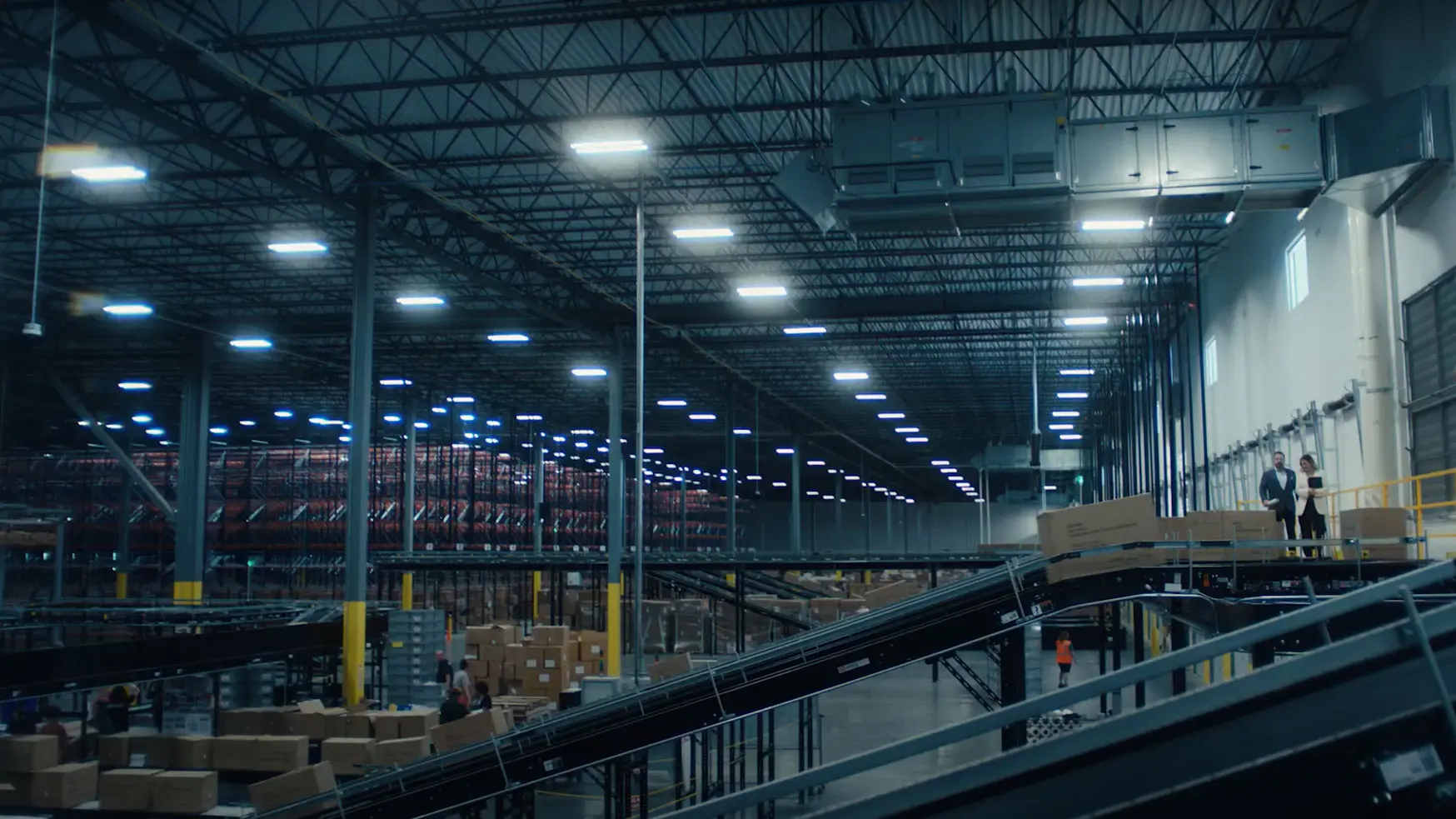
The core friction in modern enterprise fulfillment stems from legacy software architectures that rely on static, historical execution rules. Standard warehouse management systems often process order pools linearly, leading to severe localized congestion at picking zones, sortation loops, and shipping docks. When multi-channel volume spikes simultaneously, these rigid systems cannot dynamically reallocate tasks or adjust equipment speeds based on real-time constraints. Overcoming this structural friction requires a sophisticated decision-acceleration layer that embeds algorithmic intelligence into the execution layer.
Resolving these multi-node throughput bottlenecks depends on connecting siloed operational variables into a single, cohesive decision engine. Our approach to supply chain optimization emphasizes the unification of AI/machine learning models with physical material handling equipment to eliminate the processing latency that’ll typically compromise peak season performance. By implementing specialized digitized operations services, we can unlock measurable operational throughput across the entire distribution network.
What is AI’s role in supply chain operations?
Within enterprise fulfillment networks, AI functions as an optimization engine that continuously synchronizes labor, inventory, and automated assets. Rather than replacing the foundational warehouse execution system, AI overlays these platforms to process massive datasets that humans cannot analyze manually.
It interprets historical order patterns, real-time material flows, and equipment telemetry simultaneously to make instantaneous operational adjustments. This continuous calculations loop transforms the warehouse from a rigid storage facility into an elastic, responsive node capable of absorbing unexpected demand shocks and labor fluctuations without sacrificing throughput speed.
5 practical AI use cases that improve speed and accuracy:
1. Scalable AI-driven demand forecasting and multi-echelon inventory optimization.
Traditional inventory positioning relies on lagging sales data, which frequently causes over-stocking at certain regional hubs while leaving others vulnerable to stockouts. Incorporating AI-driven demand forecasting models allows systems to continuously evaluate external demand signals, seasonal trends, and regional order distributions. This continuous analysis informs cross-docking schedules and proactively repositions stock keeping units closer to anticipated buyers.
Achieving true multi-echelon inventory optimization requires balancing stock positions across regional hubs before orders are placed, which eliminates expensive emergency transshipments and stabilizes facility utilization rates. Furthermore, implementing predictive replenishment planning ensures that upstream supply lines adapt dynamically to sudden market shifts. This proactive approach delivers a substantial reduced working capital tied up in inventory, giving operators total control over their demand volatility management strategies.
2. Enterprise AI in logistics strategy and real-time transportation re-optimization.
Fulfillment velocity shouldn’t degrade the moment a trailer departs the loading dock. Integrating a modern AI in logistics strategy allows fleet managers to maintain consistent visibility over over-the-road assets. Algorithmic engines use dynamic route optimization to recalculate delivery paths based on live traffic, port congestion, and weather disruptions.
If an unexpected delay occurs, the system initiates real-time transportation re-optimization to reroute incoming shipments to alternative nodes. This tight coordination between physical transportation and facility schedules yields lower logistics and freight costs while maximizing total fleet and asset optimization.
3. Algorithmic workforce demand forecasting and flow protection.
Labor remains one of the largest variables in total fulfillment expenses, yet most facilities schedule shifts using historical averages that fail to account for real-time volatility. Utilizing predictive workforce demand forecasting engines allows management to analyze forecasted order profiles, outbound carrier cut-off times, and real-time picking velocities.
This precise supply chain staffing alignment prevents over-staffing during low-volume periods and prevents costly bottlenecks during peak periods. Field supervisors can execute shift and capacity optimization to dynamically reallocate personnel between picking, packing, and receiving zones based on real-time throughput metrics. Securing complete flow protection in warehouse environments depends on this active balancing, which guarantees throughput protection at critical constraints without over-extending human resources.
4. Predictive maintenance and asset optimization.
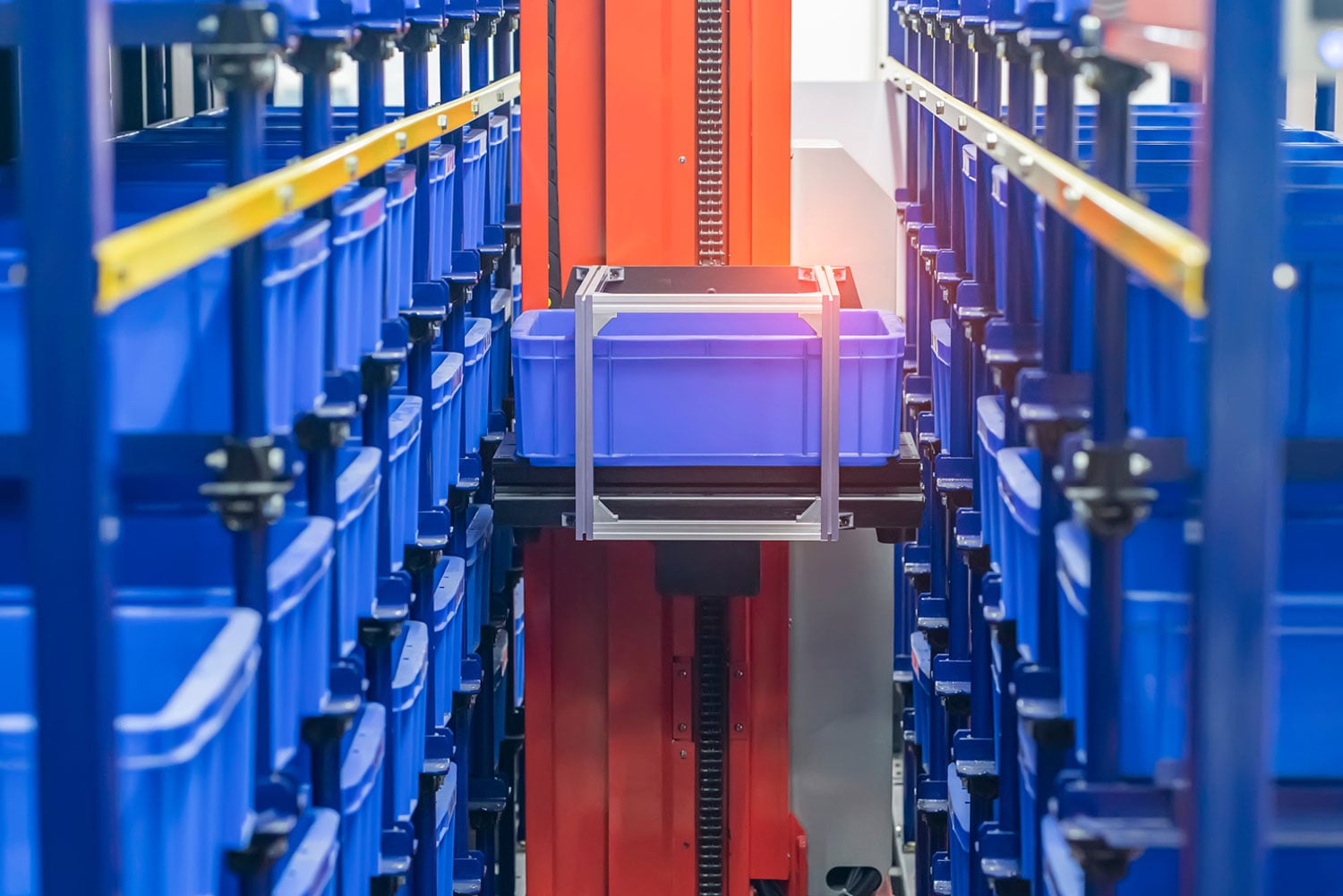
Unplanned downtime within high-scale sortation machinery or automated guided vehicle fleets can disrupt an entire regional distribution network. By tracking continuous vibration data, thermal metrics, and cycle counts from automated systems, predictive maintenance for material handling equipment algorithms identify component degradation before a physical failure occurs.
Maintenance tasks are automatically scheduled during natural operational gaps or planned shift changes. This targeted approach results in a dramatic unplanned downtime reduction, extending the operational lifespan of capital equipment and stabilizing system availability across the enterprise network.
5. Supply chain control towers and exception management.
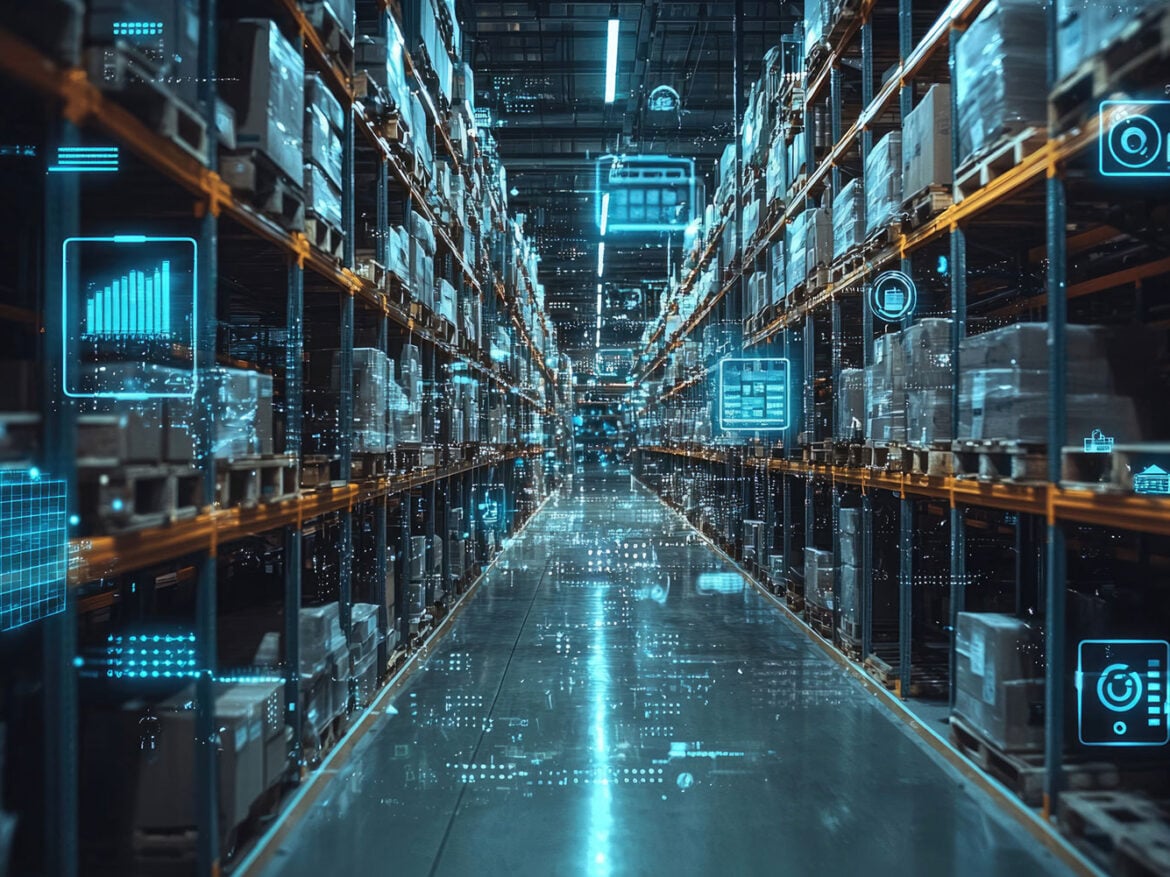
Operating a large-scale fulfillment network requires managing constant minor disruptions, from delayed inbound shipments to sudden component faults. Implementing comprehensive supply chain control towers provides a central intelligence layer that processes real-time telemetry from across the entire enterprise infrastructure. This system utilizes AI-enabled analytics to run continuous simulations of network health.
When an anomaly occurs, AI-driven exception management engines automatically execute corrective actions, such as rerouting an affected order pool to an alternative facility. This setup incorporates AI-enabled supplier risk monitoring and supplier early warning systems to anticipate component shortages before they impact production. Furthermore, AI-based order prioritization dynamically moves high-value or time-sensitive shipments to the front of the queue during capacity spikes, driving effective supply chain disruption mitigation and a major disruption response time reduction.
Quantifiable value delivered through intelligence integration.
Evaluating the performance of automated material handling infrastructure requires tracking distinct operational metrics across speed, accuracy, and capital efficiency. When we connect predictive algorithms to physical execution systems, the financial and operational impacts are immediate.
- Fulfillment speed: 20-50% reduction rate in demand forecast errors eliminates regional stockouts and costly next-day shipping rushes.
- Order accuracy: 99% accuracy rate in defect and error identification removes manual inspection bottlenecks via high-speed automated vision systems.
- Network efficiency: 15% reduction cost in total logistics optimizes asset utilization through completely harmonized data streams.
Matching AI opportunities with your business goals.
Successfully deploying these advanced capabilities across a complex enterprise network requires a structured methodology that separates realistic operational utility from market hype. IndPro runs a comprehensive AI readiness assessment framework and strategic implementation roadmap to ensure technology investments translate into measurable bottom-line value. Our structured process systematically evaluates your operational landscape to build a resilient foundation for advanced automation.
Our senior-led engineering teams begin with an exhaustive business process analysis to identify the exact friction points within your current fulfillment workflows. We then conduct a thorough data infrastructure evaluation to ensure your warehouse management, execution, and control systems possess the data cleanliness and low-latency pipelines necessary to feed advanced machine learning models.
Finally, we lead focused stakeholder alignment meetings to map out what is realistically achievable based on your current organizational maturity. This rigorous upfront discovery allows us to create custom AI adoption strategies tailored to specific industry requirements. We bridge the gap between sophisticated data science and physical warehouse execution, engineering expertise, and total operational accountability.
Get in Touch
IndPro helps you achieve operational excellence through strategic integration.
Let us help you build an effective AI strategy for your operations to maximize network efficiency and throughput accuracy. Navigating complex fulfillment challenges requires our senior-led execution, deep data discipline, and absolute operational accountability.
Get in touch with our specialists today to discuss how we’ll deploy these advanced algorithmic layers to stabilize and scale your facility’s real-time execution
IndPro Services
Since 1990, IndPro specialists have been helping warehouse and distribution leaders turn technical complexity into operational certainty. Whether you are navigating the selection of a new software layer, integrating advanced robotics, or stabilizing the performance of a high-throughput distribution network, IndPro brings senior-led execution to every phase of the lifecycle. As a leader in material handling automation, we remain accountable to the measurable results that ensure your systems support long-term growth and sustained efficiency.
Automate. Evolve. Succeed.
Hands-on leadership. Accountable partnerships. Measurable results.