August 10th, 2026
9 min readASRS 2026: High-Density Storage Pros & Cons
Is high-density ASRS right for your facility? Discover when automated storage delivers maximum ROI and when a simpler strategy wins.
High-density storage can solve difficult capacity and material flow problems, but it is not automatically the right answer for every operation.
Automated Storage and Retrieval Systems, or ASRS, are being evaluated by manufacturers, retailers, distributors, and third-party logistics providers that need to use space more effectively, improve inventory control, or support higher throughput. The business case still depends on the operation around the technology.
A strong ASRS decision begins with a simple question: what problem are we trying to solve? Storage capacity, SKU characteristics, transaction volume, labor requirements, facility constraints, software architecture, uptime expectations, and future growth all influence whether high-density automation creates enough value to justify the investment.
At IndPro, the technology comes after the operating requirements. The objective is not to fit an operation into an ASRS concept. It is to determine whether ASRS is the right tool for the work.
Executive Summary
ASRS is strongest when space is constrained, inventory behavior is understood, and transaction volume supports automated movement. The case weakens when space is available, activity is modest, product profiles change, or process problems exist. Evaluate high-density storage within the material flow strategy to improve inventory movement, not just maximize locations.
Key Takeaways
- ASRS is strongest when space, throughput, labor, and control align.
- Balance storage capacity with retrieval, replenishment, and downstream needs.
- Variable operating requirements favor conventional, selective, or hybrid storage.
- What problem should ASRS solve?
- When does high-density storage have the strongest fit?
- Why does throughput matter as much as density?
- When does ASRS not win?
- How do brownfield constraints affect the decision?
- How should software and controls fit into the ASRS strategy?
- When is a hybrid storage strategy better?
- How should leaders evaluate ASRS as a long-term investment?
- Choosing high-density storage for the right reasons.
- Get in Touch
What problem should ASRS solve?
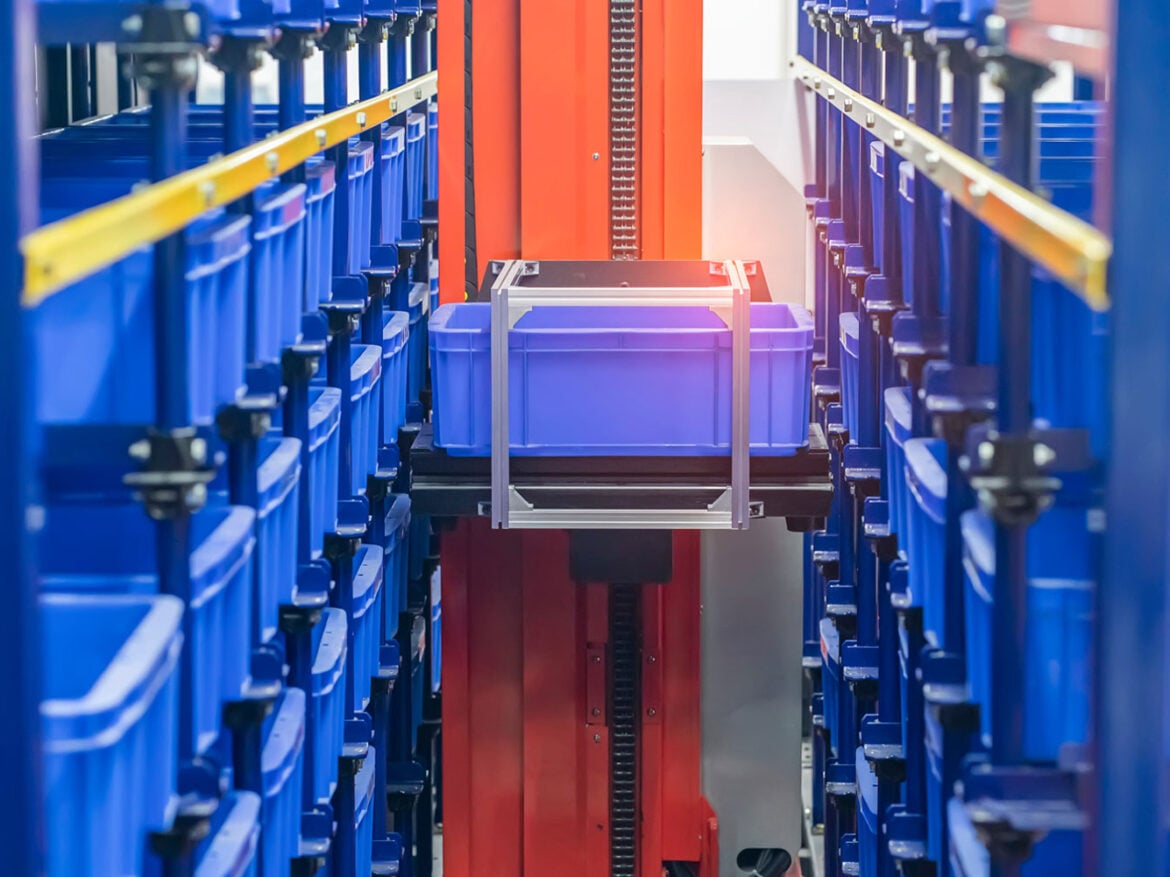
ASRS is a broad category of automation designed to place inventory into defined storage locations and retrieve it when required. Depending on the application, systems may handle pallets, totes, trays, cases, or smaller items.
The first design question should not be which ASRS technology to select. It should be which operational constraint needs to be removed.
Space may be the primary problem. An operation can approach its practical storage limit while vertical cube remains unused. Elsewhere, the bigger constraint may be excessive travel, inventory control, or replenishment timing.
These conditions require different responses. ASRS becomes most valuable when the storage strategy directly addresses a measurable operational need instead of simply increasing automation.
When does high-density storage have the strongest fit?
High-density automation becomes more attractive when usable warehouse space is valuable and inventory activity is high enough to benefit from automated movement.
Traditional storage requires access space for people and material handling equipment. Automated storage can use different access methods and make more deliberate use of vertical space within an existing footprint. Current industry guidance also identifies product dimensions, weight, product flow, and peak throughput as important inputs when evaluating ASRS design.
Density alone, however, does not establish fit. Dimensions, weights, velocity, storage requirements, order behavior, and replenishment patterns influence system configuration and capacity.
Transaction volume matters too. Removing manual travel creates more value when the movement is repeated frequently. Low-activity reserve storage may not justify the same level of automation.
The strongest ASRS applications usually have alignment across multiple variables. Space pressure, repeatable inventory behavior, transaction demand, labor requirements, and future growth combine to support the decision.
Why does throughput matter as much as density?
A dense storage system can still become a bottleneck if inventory cannot move through it at the rate the operation requires.
Engineering teams need to understand how many storage and retrieval transactions the system must support, when those transactions occur, and how peak demand changes the requirement. Replenishment is part of the same calculation because inbound and outbound activity may compete for shared equipment or interfaces depending on the architecture.
The processes around the ASRS also set practical limits. More retrieval capacity does not improve the operation if conveyor, picking, production, packing, sortation, or shipping cannot accept the resulting flow.
IndPro evaluates these interfaces together because storage performance should be judged by its contribution to total material flow. The objective is a balanced system in which capacity and movement support one another.
When does ASRS not win?
High-density automation may not be the best use of capital when it solves a problem that is not significant enough.
If storage space is available, transaction activity is modest, and conventional rack or shelving can support expected growth, a highly automated system may add complexity without creating a proportional operational benefit.
Variability also matters. Product dimensions, packaging, inventory mix, and handling requirements can change over the lifecycle of a system. The proposed ASRS needs to accommodate the range of conditions the operation can reasonably expect.
Process maturity is another consideration. Automated storage depends on accurate data and repeatable operating practices. Weak item data, inconsistent receiving, poor location accuracy, or unclear exception processes can create problems that automation does not solve.
In those situations, improving process discipline, data quality, or software configuration may deserve attention first. A responsible automation strategy must be able to conclude that ASRS should be delayed, narrowed in scope, or replaced by a simpler approach.
How do brownfield constraints affect the decision?
Many ASRS opportunities exist inside active facilities rather than new buildings. That can strengthen the case for high-density storage because the business may need more capacity without adding square footage, but it also makes implementation more demanding.
An existing facility brings fixed conditions into the design. Columns, clear heights, floor conditions, fire protection, utilities, current equipment, and software all affect what can be installed and how it can be integrated. The operation may also need to remain active during implementation. These are recognized challenges when introducing automation into an existing brownfield environment.
For that reason, the path to the future state is part of the engineering problem. Installation sequencing, temporary material flow, cutovers, testing, and operating continuity should be considered before the concept is finalized.
A system that performs well after startup but creates unacceptable disruption during implementation is not a complete operational solution. Brownfield automation requires the design and deployment strategy to work together.
How should software and controls fit into the ASRS strategy?
ASRS performance depends on clear coordination between the storage equipment and the software environment around it.
A Warehouse Management System, or WMS, commonly manages inventory and business-level warehouse workflows. A Warehouse Control System, or WCS, commonly provides control and process management for automated material handling equipment. The exact division of responsibility varies by facility, technology, and software architecture.
That distinction matters because storage, retrieval, prioritization, transaction confirmation, and exception handling need clearly defined ownership. When an ASRS connects with conveyor, sortation, robotics, production equipment, or manual work areas, those interfaces become part of the material flow design.
The objective is not simply to connect systems. It is to ensure that information and product move together predictably enough to support the operating requirement.
When is a hybrid storage strategy better?
Choosing against full high-density automation does not mean choosing against automation.
Different inventory profiles can justify different storage methods inside the same operation. High-velocity or space-intensive inventory may benefit from ASRS, while oversized, irregular, slow-moving, or highly variable products may remain better suited to conventional storage.
This is why segmentation should occur before equipment selection. Inventory characteristics, transaction frequency, handling requirements, storage duration, and downstream destination can be evaluated to determine where automation provides meaningful value.
A full ASRS may be appropriate, while a targeted system may create a better balance between automation and flexibility. Conventional storage can also remain the right answer when another constraint deserves the capital first.
How should leaders evaluate ASRS as a long-term investment?
The ASRS decision should be evaluated across the expected operating lifecycle rather than only against initial equipment cost.
Space utilization, labor requirements, maintenance capability, software support, implementation complexity, uptime expectations, inventory control, and growth all influence long-term value. The design also needs to balance current demand with a reasonable view of future requirements.
Designing only around current volume can create capacity constraints later, while designing around an aggressive future state can introduce unnecessary cost and complexity. The better approach is to evaluate realistic operating scenarios across the expected lifecycle.
IndPro helps operations teams work through that decision before technology is finalized. We define the operating requirements, evaluate system alternatives, engineer the interfaces, coordinate implementation, and remain accountable to how the complete automation system performs.
Choosing high-density storage for the right reasons.
ASRS in 2026 is not a question of whether high-density automation is capable. The more useful question is whether it improves the operation enough to earn its place in the design.
When space constraints, transaction volume, inventory characteristics, labor requirements, and growth expectations align, ASRS can become a strong component of an automation strategy. When those conditions do not align, a different storage or material handling approach may provide greater value with less complexity.
IndPro helps manufacturers, retailers, distributors, and third-party logistics providers make that distinction before major capital is committed. As an accountable automation partner, IndPro helps define the strategy, engineer the solution, coordinate implementation, integrate the required technologies, and support long-term system performance.
The objective is not more automation. It is the right automation, applied where it improves measurable operational performance.
Get in Touch: Ready to determine if ASRS is the right fit for you?
Before committing capital to high-density storage, validate your operational data with an objective automation partner. IndPro helps you analyze space constraints, throughput bottlenecks, and material flow to engineer a strategy built around your specific requirements—whether that means full ASRS, a hybrid layout, or process optimization.
Reach out to our engineering team today to evaluate your transaction volumes, SKU growth, and brownfield constraints before selecting a system.
IndPro Services
Since 1990, IndPro has provided expert robotics and automation integration for manufacturing, fulfillment, warehousing, and distribution operations nationwide. Holding an active GSA Contract, we deliver senior-led technical execution and system lifecycle support to commercial industry leaders as well as US military and government entities. From advanced robotic integration to software orchestration and network stabilization, IndPro converts complex automation into reliable, high-throughput operations.
Automate. Evolve. Succeed.
Hands-on leadership. Accountable partnerships. Measurable results.
Related Posts
Managing Mixed Robot Environments: How to Run AMRs Alongside ASRS and Conveyors
Article
Strategic Infrastructure Selection: Aligning AMRs & Conveyors with Throughput Goals
Article