September 21st, 2026
9 min readPeak Season Preparedness: Stress-Proof Warehouse Design
Discover strategies for engineering resilient warehouse automation systems that maintain throughput, eliminate operational bottlenecks, and ensure fast recovery under stress.
Peak volume does more than test warehouse capacity.
It shows whether an automated system – and its storage, controls, replenishment, labor, and downstream processes – can keep working together when the operating margin gets tight.
Peak season has a way of exposing problems that are easy to live with during an average week.
A conveyor that normally has room to recover from a short stoppage suddenly fills every accumulation zone around it. Picking keeps moving, but packing starts falling behind. Replenishment cannot keep the fastest-moving locations full. Exception lanes that are manageable at normal volume begin filling faster than operators can clear them.
Those problems usually did not begin at peak. Peak simply took away the extra capacity that had been covering them up.
Preparing for that kind of demand is not about running every machine at maximum speed. It is about knowing where the operation starts to lose margin, what happens next when one process slows down, and how quickly the system can recover without losing the shift.
Executive Summary
Peak season preparedness requires viewing the warehouse as an integrated system rather than focusing solely on forecasted volume. Sustained demand shifts order mix and strains process balance regardless of equipment capacity. True readiness comes from identifying operational constraints, managing inter-process buffers, and executing clear recovery plans.
Key Takeaways
- Peak volume exposes weak links. Processes that look stable at normal demand can lose their margin quickly.
- The complete process determines throughput. The fastest machine in the building does not set the operating rate.
- Recovery matters. A peak-ready system needs practical ways to handle congestion, faults, exceptions, and changing priorities without losing control of the shift.
- Peak usually exposes a constraint that was already there.
- Design for the peak profile, not just the peak number.
- Do not solve one bottleneck by creating another.
- Controls matter more when the building is full.
- Replenishment can quietly become the real constraint.
- Stress testing should put real pressure on the operation.
- Recovery capacity is part of throughput.
- Peak readiness starts before the volume arrives.
- Get in Touch
Peak usually exposes a constraint that was already there.
Most distribution centers do not struggle at peak because everything fails at once.
Usually, one part of the operation runs out of room first.
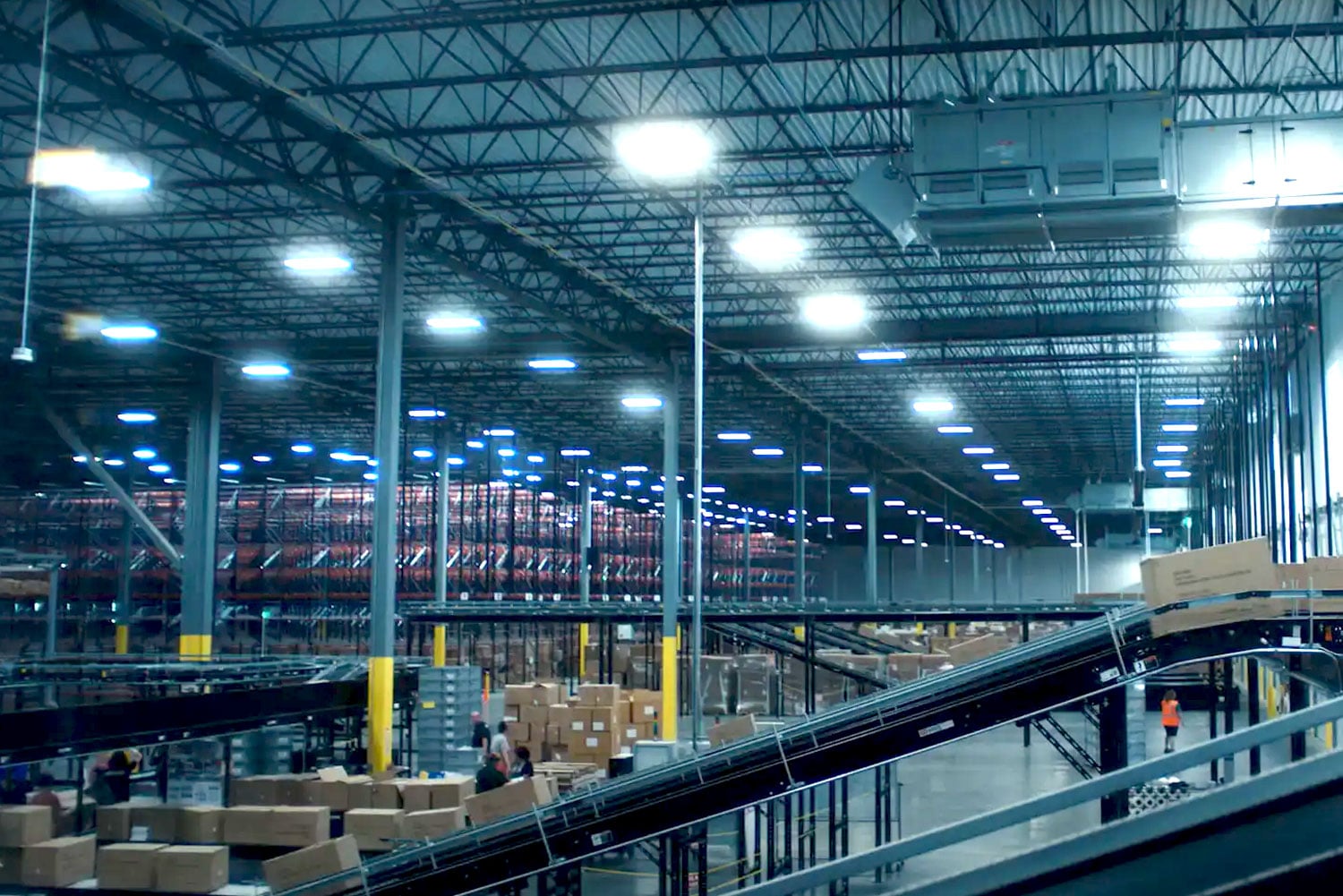
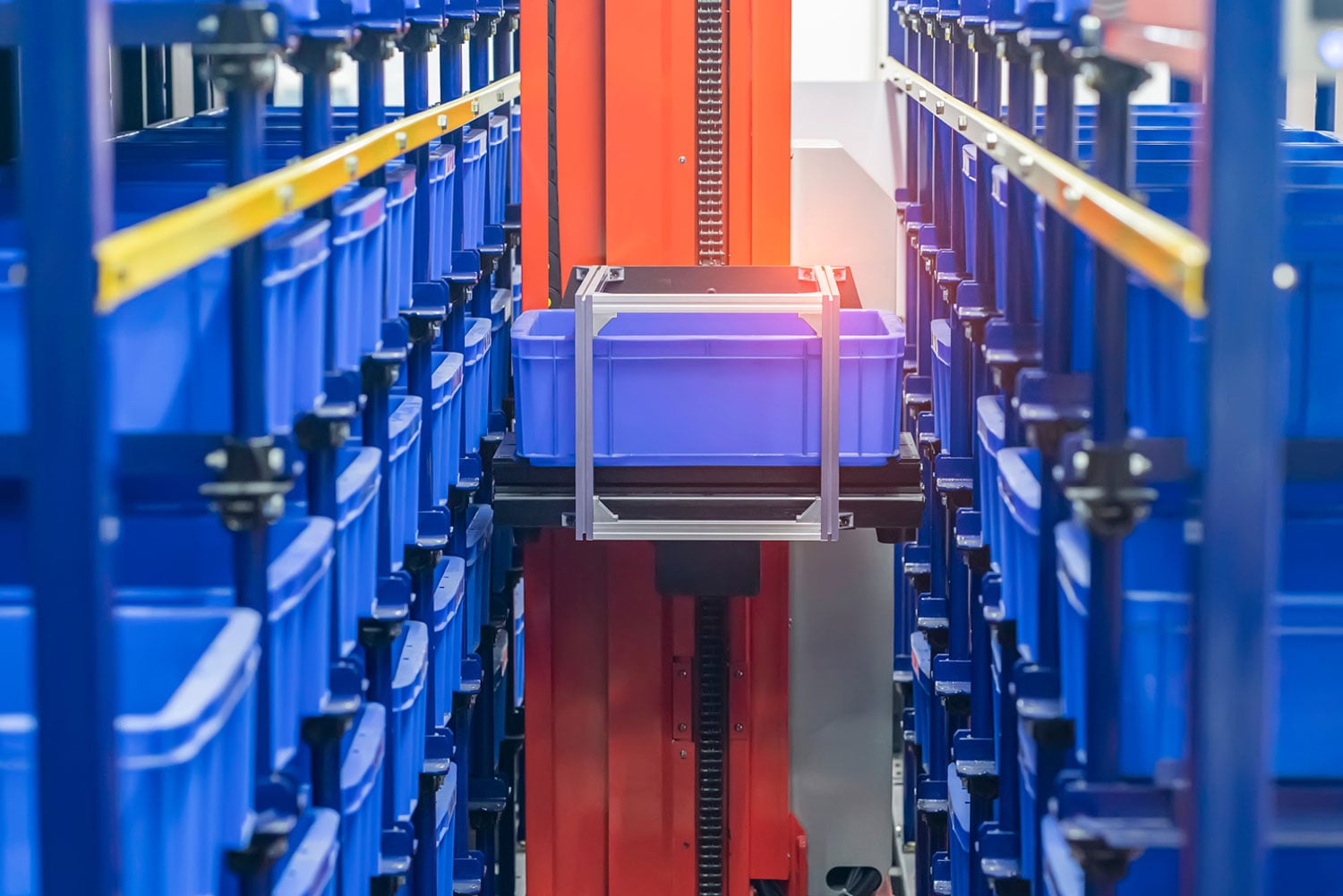
Picking may produce enough volume, but packing cannot absorb it. An Automated Storage and Retrieval System (ASRS) may deliver inventory at the required rate while replenishment struggles to keep active stock available. A sorter may have enough rated capacity, but its exception process becomes overloaded.
Even a small conveyor fault behaves differently when there is nowhere left for product to accumulate.
Equipment ratings only tell part of the story. A sorter may be capable of processing a certain rate, but the building still has to pick, transport, sort, pack, label, and ship that work.
The operation can only sustain what the complete process can handle.
During normal volume, spare capacity between those steps can hide an imbalance. Peak removes that margin.
Design for the peak profile, not just the peak number.
One of the first questions should be what peak volume actually looks like.
Two days can have nearly identical order counts and place completely different demands on the warehouse.
One may consist of predictable case quantities moving through a narrow SKU range. Another may generate thousands of each-pick lines across the building. A promotion can drive a large percentage of the day’s activity into a small group of locations and put unusual pressure on replenishment and picking.
The total volume may be the same. The work inside the building is not.
Good peak planning looks at order lines, units per order, SKU velocity, inventory location, replenishment requirements, carton characteristics, carrier cutoffs, and where activity is likely to concentrate.
Duration matters too.
Running a system at a target rate for fifteen minutes during a test is one thing. Holding that rate across a full shift is another.
Operators take breaks. Exceptions build. Replenishment has to catch up. Minor equipment interruptions happen. None of that is unusual, so the design has to account for the operation as it actually runs.
Do not solve one bottleneck by creating another.
There is no single slotting rule that works across every automated system.
In an ASRS or goods-to-person operation, product dimensions, weight, container compatibility, inventory depth, retrieval frequency, and replenishment all influence where inventory belongs.
A high-velocity SKU may need several storage positions or more active inventory inside the system. Another fast mover may make more sense in conventional storage because of its size, handling requirements, or reserve quantity.
AMRs create a different situation. They reduce manual travel, but robot travel is still travel. If high-demand inventory repeatedly sends robots long distances or concentrates traffic in one area, the slotting plan can start working against the fleet.
Conveyor and zone-picking systems have their own concerns. If too much demand is concentrated in one zone, that area may become the constraint even while another part of the system has capacity available.
The equipment changes the question. What makes sense in a conveyor pick module may make very little sense inside an ASRS.
That is why slotting and automation design need to be considered together.
Controls matter more when the building is full.
Peak exposes control problems just as quickly as mechanical ones.
At normal volume, a basic work-release strategy may appear adequate. Once the system begins filling, those decisions matter more.
How much work is being released? Can work be held before a congested area becomes completely saturated? What happens if a sorter lane becomes unavailable? Does the system keep feeding the problem because upstream equipment is still able to run?
A Warehouse Management System (WMS) typically manages inventory and order-level processes, while a Warehouse Control System (WCS) coordinates automated material handling equipment. Depending on the architecture, additional execution logic may coordinate work across those layers.
The important part is not the software label. It is whether the system recognizes that one area is running out of capacity and responds before the backup spreads through the building.
Sometimes the right decision is to stop releasing more work.
Keeping every machine busy is not the same thing as keeping the operation flowing.
Replenishment can quietly become the real constraint.
Peak planning usually starts with outbound picking. Replenishment deserves the same attention.
If a high-velocity forward location keeps running empty, more picking capacity will not solve the problem. Faster picking simply empties the location sooner.
The same principle applies to goods-to-person systems and automated storage. Active inventory has to be available where fulfillment needs it, and reserve stock has to reach that position quickly enough to support demand.
During peak, replenishment may also compete with outbound activity for labor, aisle access, equipment, or automated system capacity. That competition needs to be understood before the busiest days arrive.
A practical peak plan identifies which SKUs will create the heaviest replenishment demand, when that work should occur, and whether the reserve-to-forward process can keep pace without interfering with fulfillment.
During peak, replenishment is not a background task. It is part of the fulfillment process.
Stress testing should put real pressure on the operation.
A useful peak test should do more than prove that the equipment runs. It should put realistic pressure on the complete process.
Use representative order profiles. Run the busy SKUs. Include replenishment. Let exceptions happen. Put realistic demand on workstations and downstream processes.
Then create a few problems.
Stop a piece of equipment. Back up a destination. Fill an exception lane. Hold part of the process and watch what happens upstream.
Maintenance and operations should be involved because they will be clearing faults, recovering product, and making decisions when the building is busy.
A system that performs well only when everything is running perfectly has not really been tested for peak.
The point of a stress test is not to prove that the design works. It is to find where it stops working well.
Recovery capacity is part of throughput.
No automated warehouse gets through an entire peak period without exceptions.
Sensors get blocked. Labels fail to read. Product arrives damaged. Drives fault. Mechanical components wear. Operators make mistakes.
The question is how much of the building one problem can affect.
A minor fault should stay minor whenever possible. That requires sensible accumulation, accessible equipment, clear fault information, trained personnel, spare-parts planning, preventive maintenance, and recovery procedures people understand before they need them.
Some failures matter more than others.
A single workstation may have another path available. A failure at a common merge feeding shipping may have a much larger impact.
If one component can significantly restrict the operation, the team should know that before peak starts.
Peak readiness starts before the volume arrives.
Once the building is full of peak work, most major system decisions have already been made.
Preparation should start with an honest look at how the operation behaved the last time it was under pressure.
Where did queues form? Which faults took too long to recover? Where did overtime increase? Which processes needed repeated manual intervention? Did replenishment keep up? Did the controls prevent congestion, or continue feeding it?
Those questions usually lead to better decisions than simply asking whether the warehouse needs more automation.
Get in Touch: The goal is to build an operation that can sustain.
IndPro works with warehouse and distribution teams to evaluate material flow, controls, automation, software integration, system capacity, and operating constraints before those constraints become peak-season problems.
Sometimes the answer is additional automation. Sometimes it is a controls adjustment, different work-release logic, a better replenishment strategy, more accumulation, maintenance work, or a process correction.
A mature automation strategy knows the difference.
The goal is not to make every piece of equipment run at maximum speed. It is to build an operation that can sustain the required workload, absorb normal disruption, and recover without losing control of the complete process.
Is your facility engineered to absorb peak stress?
Stop guessing whether your next bottleneck is a controls setting, a replenishment lag, or a physical hardware constraint. Connect with an automation specialist today to evaluate your end-to-end system logic and build an operational strategy that keeps work moving smoothly under pressure.
IndPro Services
Since 1990, IndPro has provided expert robotics and automation integration for manufacturing, fulfillment, warehousing, and distribution operations nationwide. Holding an active GSA Contract, we deliver senior-led technical execution and system lifecycle support to commercial industry leaders as well as US military and government entities. From advanced robotic integration to software orchestration and network stabilization, IndPro converts complex automation into reliable, high-throughput operations.
Automate. Evolve. Succeed.
Hands-on leadership. Accountable partnerships. Measurable results.