October 5th, 2026
7 min readWarehouse Automation Commissioning and Go-Live
Don’t risk a costly startup. See how IndPro bridges the gap between technical acceptance and seamless, high-volume production.
Steps separating smooth launches from chaos
What operations and supply chain leaders should expect before an automation system is turned over to production.
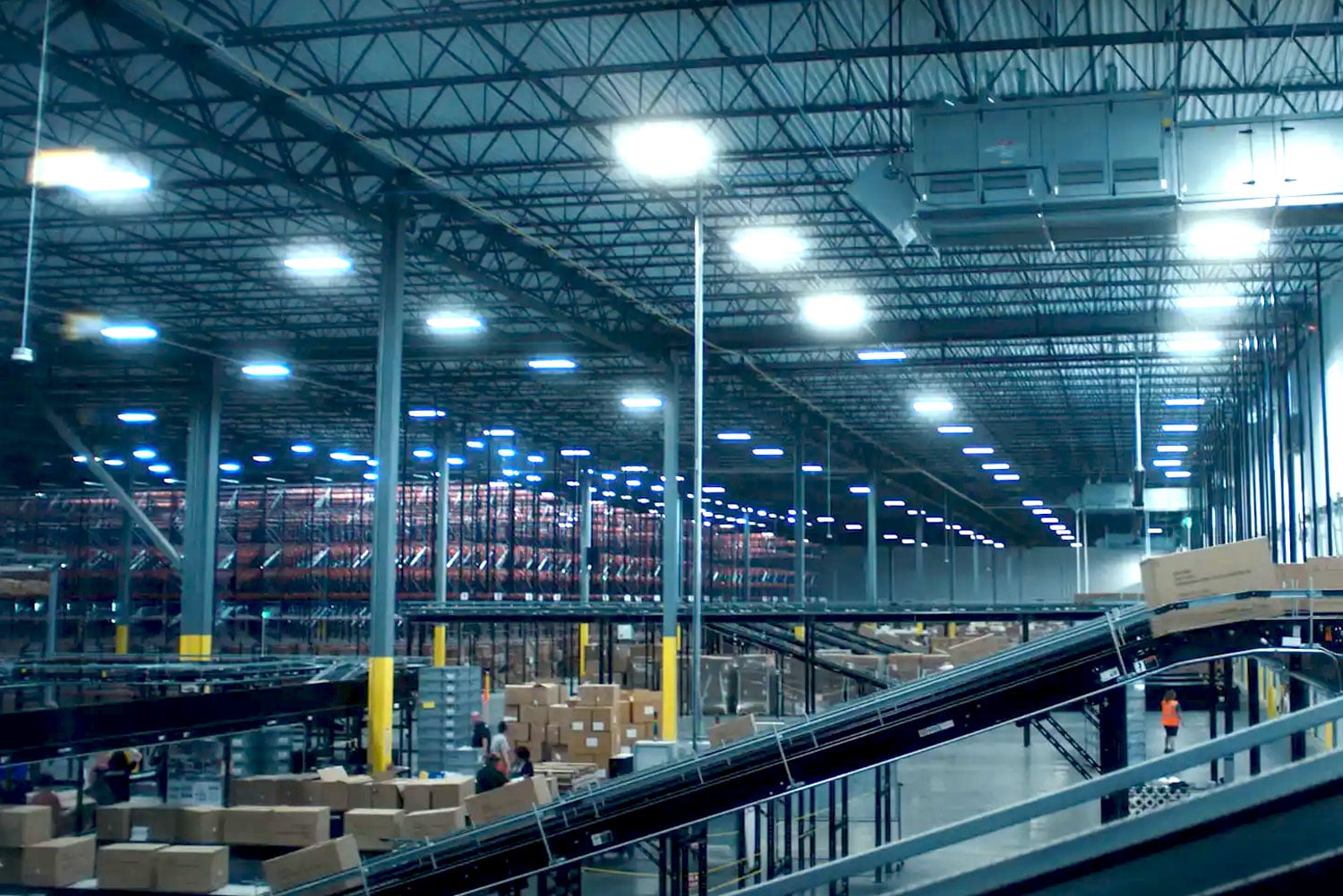
By the time a warehouse automation project reaches commissioning, most of the visible work is done. Conveyor is installed, control panels are powered, scanners are reading, robots are moving, and software is communicating with the equipment.
That can make a system look ready before the operation is ready to depend on it.
Anyone who has been through a large automation startup knows the difference. Equipment can run correctly on its own and still struggle when real orders, inventory, operators, software decisions, and exceptions arrive at the same time. Commissioning is where those gaps should be found, understood, and corrected before production exposes them.
Executive Summary
Commissioning should answer a practical question: can the operation run this system reliably under real production conditions?
That means proving more than individual machines. Throughput, controls behavior, software interfaces, recovery procedures, operator readiness, maintenance response, and sustained performance all have to be tested together. Technical acceptance matters, but operational readiness is what allows the business to take ownership.
Before full production is released, leadership should expect the commissioning process to:
- Tie acceptance testing to measurable operating requirements.
- Test failure recovery as deliberately as normal material flow.
- Increase production volume only after the system demonstrates stable performance.
- Test against the design basis
- Prove the equipment, then prove the integration
- Test what happens when things go wrong
- Make go-live a readiness decision
- Ramp production instead of forcing it
- Ramp-to-rate tests the business case
- Commissioning is where integration becomes operations
- Get in Touch
Test against the design basis
Before commissioning begins, the team should know what successful performance means.
If a system was designed around a specific cartons-per-hour rate, the test should reflect the conditions behind that number. Product mix, routing distribution, replenishment demand, downstream capacity, recirculation, and operating duration all affect actual performance.
The same applies to automated storage and robotics. An automated storage and retrieval system, or ASRS, may complete individual cycles without proving it can sustain the transaction demand of the surrounding operation. An autonomous mobile robot, or AMR, system may execute missions correctly but behave differently when traffic increases, charging demand builds, or workstations cannot keep pace.
At IndPro, commissioning is viewed from the complete material-flow perspective. A subsystem can meet its own specification and still limit the operation if the surrounding process cannot support it.
Prove the equipment, then prove the integration
Factory Acceptance Testing, or FAT, can verify controls logic, alarms, communications, and functional sequences before equipment reaches the facility. Site Acceptance Testing, or SAT, brings that testing into the installed environment with field wiring, sensors, drives, networks, and actual equipment.
Those tests are important, but neither proves the complete operation.
Depending on the architecture, a warehouse management system, or WMS, may pass work through a warehouse execution system, or WES, or a warehouse control system, or WCS. Programmable logic controllers, or PLCs, then execute machine-level functions.
Commissioning has to follow both the order and the material through those handoffs. Was the correct work released? Was the product identified and routed properly? Did the confirmation make it back upstream? Did inventory and order status remain accurate?
A conveyor can keep moving while the information behind the product is wrong. That is why IndPro looks closely at interfaces, not just individual equipment.
Test what happens when things go wrong
Normal-flow testing only tells part of the story. Commissioning should also create the conditions the operation will eventually face on its own.
Block a downstream lane. Introduce a barcode no-read. Take a conveyor zone offline. Remove an AMR from service. Restart part of the system after a controlled shutdown.
The point is to see how the system recovers.
Does product stop where it should? Does routing recover correctly? Are alarms useful to the operator? Can the system recover without duplicate work, stranded inventory, or manual data correction?
A short fault may have little impact if it is easy to diagnose and recover. A recurring issue that takes twenty minutes to isolate is different. Fault frequency, recovery time, recurring jams, no-read rates, recirculation, and manual intervention provide a much better picture of operating risk than a simple pass or fail.
Make go-live a readiness decision
Every project has a target date, but a date does not make the system ready.
Before go-live, the team should understand remaining punch-list items, controls and software versions, interface status, backups, recovery procedures, support coverage, and the cutover sequence.
The operation also needs to be ready. Operators should have enough hands-on time to recognize normal system behavior and work through routine exceptions. Maintenance personnel need to understand alarms, fault isolation, resets, and safe recovery.
Commissioning is not complete if only the integrator knows how to keep the system running.
Ramp production instead of forcing it
Passing acceptance testing does not mean the operation should immediately run at full design volume.
A controlled ramp gives the team time to see how the system behaves as demand increases. The first production period may use reduced order volume, selected SKU families, limited waves, or only part of the system.
Leadership should watch more than throughput. Backlog, labor hours, equipment availability, exception frequency, order cycle time, and maintenance response all help show whether the operation is stabilizing.
A production rate can look impressive while technicians are constantly clearing faults behind the scenes. That is not stable production. Volume should increase because the system demonstrates that it can handle more work.
Ramp-to-rate tests the business case
Commissioning also begins testing the financial assumptions behind the automation.
Once production stabilizes, actual performance should be compared with the original operating baseline. Depending on the project, that may include labor productivity, system availability, downtime, maintenance hours, exception rates, order cycle time, and sustained throughput.
Labor savings also need to be measured carefully. The financial benefit comes when labor cost is actually removed, avoided as volume grows, or redeployed into work that creates additional value. Maintenance, software support, energy, and technical labor should also be included when evaluating the operating result.
Commissioning does not prove the entire return on investment on day one, but it establishes the performance baseline leadership needs to measure it.
Commissioning is where integration becomes operations
A smooth launch does not mean nothing went wrong. Complex automation will produce faults and unexpected conditions. The difference is whether the team has already learned how the system responds before those problems appear during live production.
IndPro approaches commissioning as part of the engineering and integration process, not as a final handoff after installation. That means carrying operating requirements through system design, controls integration, acceptance testing, cutover, ramp-up, and stabilized performance.
An accountable integrator should help define what the operation needs, engineer the solution around those requirements, coordinate the technologies and suppliers involved, and remain engaged long enough to verify how the system performs once real work begins.
Turning equipment on is the easy part. The real measure of commissioning is whether the operation is ready to depend on it.
Get in Touch
Operationalizing complex automation requires an engineering partner who stays engaged well past technical acceptance to ensure your team, controls, and software interfaces are fully ready for live production.
Whether you are evaluating a new system design, preparing for commissioning, or looking to derisk an upcoming go-live, IndPro brings a complete material-flow perspective to every stage of integration.
Ready to turn your equipment on without turning your operation upside down?
Talk with our integration specialists to see how we help leaders bridge the gap between technical acceptance and true operational readiness. Reach out to an integration specialist today to discuss your upcoming project goals and operational requirements.
IndPro Services
Since 1990, IndPro has provided expert robotics and automation integration for manufacturing, fulfillment, warehousing, and distribution operations nationwide. Holding an active GSA Contract, we deliver senior-led technical execution and system lifecycle support to commercial industry leaders as well as US military and government entities. From advanced robotic integration to software orchestration and network stabilization, IndPro converts complex automation into reliable, high-throughput operations.
Automate. Evolve. Succeed.
Hands-on leadership. Accountable partnerships. Measurable results.