July 13th, 2026
6 min readManaging Mixed Robot Environments: How to Run AMRs Alongside ASRS and Conveyors
Bridge the gap between AMRs, AS/RS, and conveyors to eliminate operational silos, streamline material flow, and maximize total warehouse efficiency.
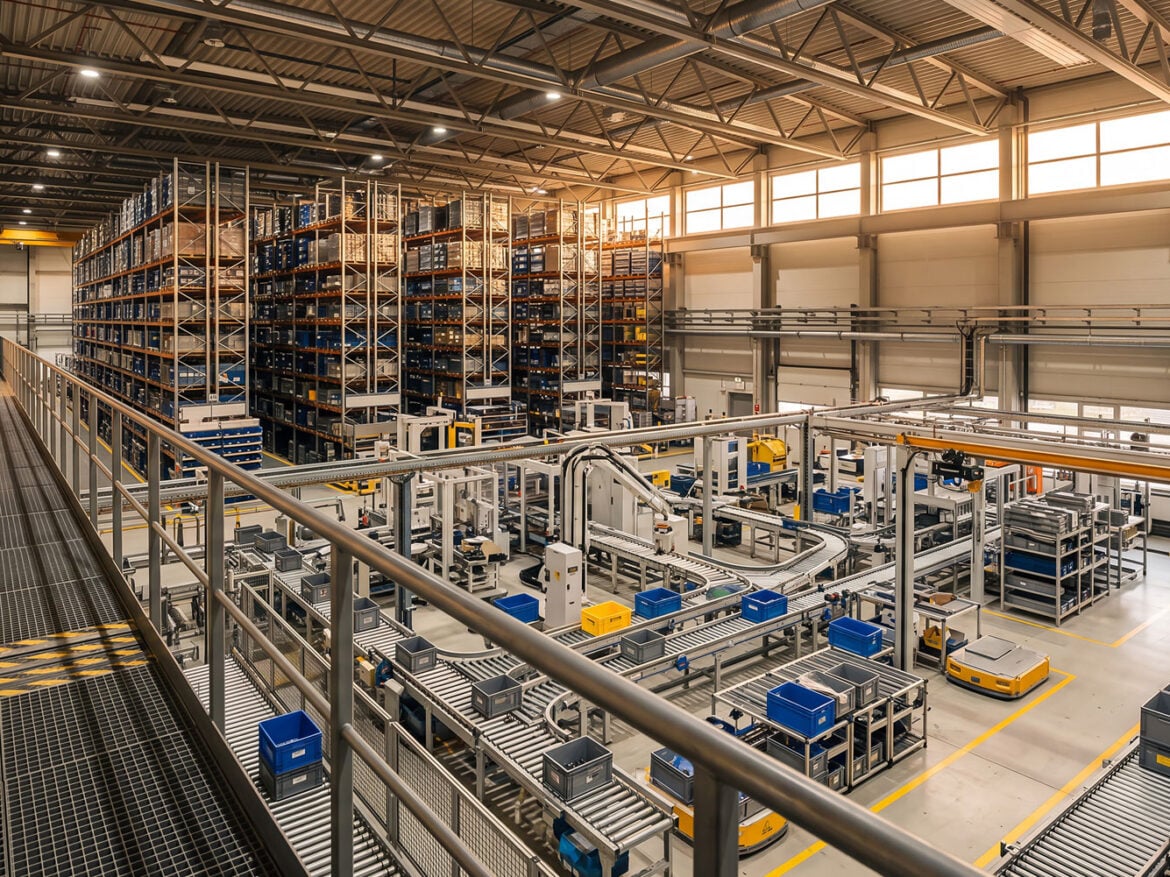
Automating a modern distribution center or manufacturing facility is rarely a single-technology project. Peak efficiency relies on bringing together specialized automation assets – Autonomous Mobile Robots (AMRs) for horizontal agility, Automated Storage and Retrieval Systems (ASRS) for high-density vertical staging, and Conveyance for high-volume continuous flow.
However, deploying these technologies in isolation creates operational silos. The real engineering challenge lies in orchestrating a mixed-robot environment into a single, cohesive ecosystem where product handoffs, safety protocols, and WCS/WES/WMS software architectures operate seamlessly.
Executive Summary
Deploying a mixed automation ecosystem – combining AMRs, ASRS, and conveyance – delivers peak efficiency, but success hinges on integration. Operating in silos creates software friction and bottlenecks. Unifying systems through a Warehouse Execution System (WES or WCS), standardizing automated handoffs, and managing traffic transforms disparate equipment into a single, synchronized network.
Key Takeaways
- Unify Control: Connect fixed automation and AMRs using a WES/WCS.
- Master Handoffs: Standardize powered top-decks and optical alignment signals.
- Balance Capacity: Run fixed assets continuously and buffer with AMRs.
- Unified software architecture: fleet management vs. WES/WCS/WMS
- Master the physical handoff: interfacing fixed and mobile assets
- Floor traffic control and spatial segregation
- Balancing system capacity: preventing bottlenecks
- Maintenance strategies for multi-asset operations
- Get in Touch: Partnering with Indpro Services for integrated automation
Unified software architecture: fleet management vs. WES/WCS and WMS
The biggest bottleneck in mixed-automation environments isn’t mechanical—it’s software fragmentation. Running proprietary management software for each subsystem leads to dropped communications, inventory discrepancies, and idle equipment.
- The Middleware Layer (WES or WCS): A robust Warehouse Execution System (WES) or Warehouse Control System (WCS) sits between your top-level WMS and individual equipment controllers. The WES acts as the central conductor, translating inventory tasks into specific commands for the ASRS, conveyor PLC, and AMR fleet manager.
- Interoperability Standards: Modern mixed environments increasingly rely on open communication protocols like VDA 5050 or standardized APIs. These frameworks allow a single control platform to manage heterogeneous AMR fleets and interface directly with fixed machinery without locking you into a single vendor ecosystem.
System Integration Insight: ASRS and conveyors operate on deterministic timers, while AMRs operate on dynamic travel times. Your WES/WCS must dynamically buffer and schedule tasks to ensure AMRs arrive precisely when an ASRS crane completes an outbound drop.
Master the physical handoff: interfacing fixed and mobile assets
The junction points where mobile robots meet fixed automation represent the highest risk for mechanical jams, sensor misalignments, and dropped payloads. Successful handoffs rely on a three-stage mechanical and hardware sequence:
- ASRS Pick and Outfeed Spur: High-speed outfeed cranes stage the load at a precise transfer location equipped with position sensors and alignment guides.
- Automated Transfer Station: Photoeyes, optical transceivers, or industrial Wi-Fi handshake signals confirm physical deck speed and precise alignment before payload movement begins.
- AMR Top-Deck Engagement: The AMR receives the wireless clearance signal and engages its top-mounted powered roller or belt attachment to smoothly pull or push the payload into place.
Additional interface considerations include:
- Powered Conveyor-to-AMR Transfers: Equipping AMRs with top-mounted powered decks allows them to transfer goods automatically without requiring static gravity rollers or manual intervention.
- ASRS Outfeed Integration: High-speed ASRS outfeeds require tight positioning tolerances. Precision docking methods—such as floor-mounted positioning pins, QR grid targets, or magnetic alignment—ensure the AMR docks within millimeter tolerances.
Floor traffic control and spatial segregation
Mixing high-speed fixed machinery, autonomous mobile vehicles, and human operators requires a structured floor strategy to maintain safety without sacrificing throughput.
- Dynamic Traffic Management: AMR fleets using LiDAR and SLAM navigate obstacles dynamically, but heavy traffic intersections near conveyor outfeeds or ASRS aisles can lead to gridlock. Implementing virtual “one-way zones,” priority right-of-way rules, and speed-restricted corridors prevents congestion.
- Physical vs. Virtual Safety Zones: Fixed conveyors and ASRS cranes require hard physical safety fencing, light curtains, and interlocked gates. AMRs operate on dynamic safety zones (LiDAR field switching) that slow down or stop the vehicle based on proximity to fixed barriers or pedestrians.
Balancing system capacity: preventing bottlenecks
In a mixed environment, overall throughput is governed by the slowest link in the transport chain. Balancing capacity requires understanding the operational profile of each asset class:
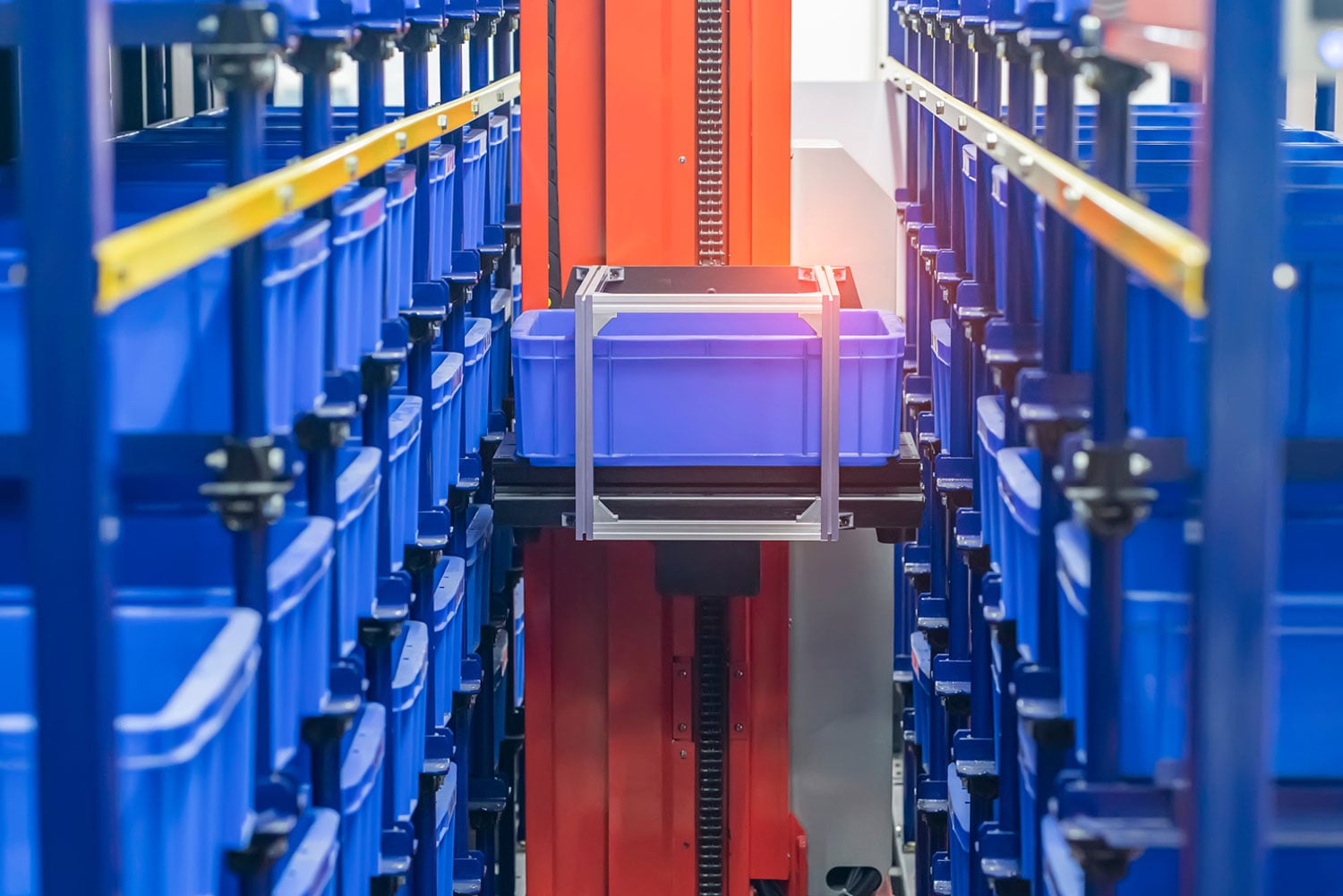
- ASRS Capabilities: Designed for high-density vertical storage and retrieval, delivering high-speed, deterministic batch output. The primary bottleneck risks are crane travel speeds and outfeed queue capacity.
- Conveyor Capabilities: Designed for bulk point-to-point transport with continuous, ultra-high volume capacity. The primary bottleneck risks are physical layout rigidity and accumulation line limits.
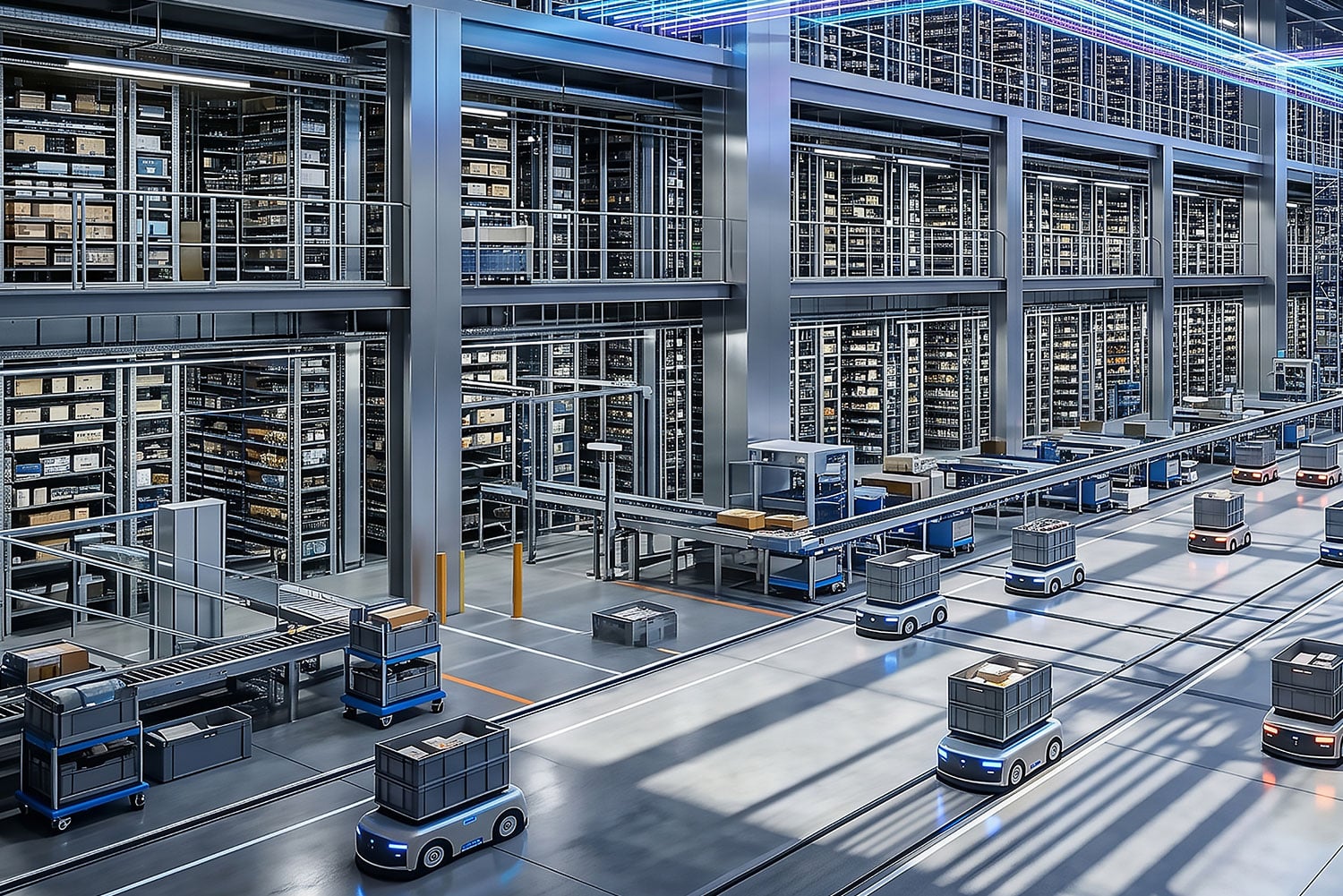
- AMR Capabilities: Designed for flexible cross-dock and point-to-point transport with variable batch capacity. The primary bottleneck risks are traffic congestion at key intersections and fleet battery charging cycles.
To maximize ROI, design the system so that fixed automation (ASRS and conveyors) operates continuously at peak efficiency, using AMRs as an elastic buffer to absorb volume spikes and bridge variable travel paths.
Maintenance strategies for multi-asset operations
Maintaining a mixed automation footprint requires a shift from reactive repairs to orchestrated maintenance schedules.
- Synchronized Downtime: Schedule routine maintenance for conveyor motors and ASRS cranes during planned AMR fleet charging windows to minimize facility-wide throughput impact.
- Predictive Analytics: Standardize telemetry monitoring across all systems. Motor vibration sensors on conveyors, battery health tracking on AMRs, and cable wear metrics on ASRS cranes should feed into a central dashboard.
- Cross-System Spare Parts Management: Maintain critical replacement inventory for sensor arrays, wireless modules, and power supplies that are shared across different automation subsystems.
Get in Touch: Partnering with Indpro Services for integrated automation
Successfully running AMRs alongside ASRS and conveyors requires more than buying high-performance hardware—it demands rigorous systems integration, custom software alignment, and precise mechanical engineering.
At Indpro Services, we specialize in designing and deploying end-to-end material handling environments. We connect disparate automation technologies into a single, unified operational strategy that maximizes throughput, eliminates bottlenecks, and delivers long-term flexibility for your facility.
Ready to eliminate automation silos? Reach out to our engineering team today to analyze your throughput data and orchestrate a seamless, high-efficiency material handling environment.
IndPro Services
Since 1990, IndPro has provided expert robotics and automation integration for manufacturing, fulfillment, warehousing, and distribution operations nationwide. Holding an active GSA Contract, we deliver senior-led technical execution and system lifecycle support to commercial industry leaders as well as US military and government entities. From advanced robotic integration to software orchestration and network stabilization, IndPro converts complex automation into reliable, high-throughput operations.
Automate. Evolve. Succeed.
Hands-on leadership. Accountable partnerships. Measurable results.