October 20th, 2025
7 min readAutomation ROI: How to Measure and Justify Your Investment
Automation offers a path forward, but for many organizations, it’s not a question of interest – it’s a question of investment. Decision-makers need proof, not promises.
Why ROI Matters More Than Ever
In today’s fast-moving logistics and distribution environment, operations leaders face relentless pressure to meet customer demands, absorb rising labor costs, and optimize performance – all while staying under budget. Automation offers a path forward, but for many organizations, it’s not a question of interest – it’s a question of investment. Decision-makers need proof, not promises.
That’s why return on investment (ROI) is no longer just a nice-to-have metric. It’s the cornerstone of any automation strategy. If you can’t justify it, you can’t fund it. And in 2025, as economic pressures tighten and digital transformation accelerates, the need to clearly articulate ROI is greater than ever.
At IndPro, we work with clients across industries to not only design automation solutions but to help them build bulletproof business cases. Explore how we help decision-makers build confidence with data-backed supply chain ROI analysis. Because great ideas don’t move forward without numbers that stand up to scrutiny.
How to Measure and Justify Your Automation Investment
- The Problem with “Soft” ROI: Beyond Hype and Hopes
- What to Measure: Core Drivers of ROI in Warehouse Automation
- Tools and Frameworks for ROI Modeling
- Timing Matters: Short-Term Wins vs Long-Term Value
- Common Pitfalls: Why Some Automation Projects Fail to Deliver ROI
- Real-World ROI: What Success Looks Like
- Make the Case: How to Present ROI Internally
Get in Touch: Stop Calculating ROI, Start Engineering It.
The Problem with “Soft” ROI: Beyond Hype and Hopes
If you can’t measure it, you can’t manage it.
Automation vendors often promise the world: increased efficiency, better accuracy, improved flexibility. But what do those claims really mean in dollars and cents? Too often, the ROI story is vague, anecdotal, or buried in assumptions.
Soft benefits – like “better morale” or “future scalability” – have their place. But they can’t be the foundation of your financial justification. Executives need to see clear cost savings, measurable throughput improvements, and timelines for breakeven. Otherwise, the project may never make it past the boardroom.
IndPro helps clients move beyond the buzzwords by tying every automation investment to operational KPIs that matter: cost-per-order, error rates, cycle time, labor hours, space utilization. If you can’t measure it, you can’t manage it – and you certainly can’t justify it.
What to Measure: Core Drivers of ROI in Warehouse Automation
A successful ROI analysis starts with identifying the right levers. In warehouse and distribution environments, these typically include:
- Labor cost reduction: Replacing or reallocating full-time equivalents (FTEs), reducing overtime, and avoiding seasonal headcount spikes.
- Accuracy gains: Lowering error rates leads to fewer returns, less rework, and improved customer satisfaction.
- Throughput increases: More orders processed per shift or per picker translates directly to revenue.
- Space optimization: Higher-density storage and automated material flow can delay or eliminate the need for facility expansion.
- Safety improvements: Fewer workplace injuries reduce downtime, claims, and compliance risks.
Every one of these areas has a dollar value attached – and when layered together, they form a compelling financial case for automation. At IndPro, we collaborate closely with client finance teams to model each variable with realistic assumptions.
Tools and Frameworks for ROI Modeling
To build credibility, your ROI must be calculated using standard financial frameworks. That means going beyond “gut feel” and deploying structured models such as:
- Payback Period: How long until the savings offset the initial investment?
- Net Present Value (NPV): What is the total value of this investment over time, discounted to today’s dollars?
- Total Cost of Ownership (TCO): What will this system cost over 5-10 years, including maintenance, support, and training?
We recommend scenario-based modeling: one case with automation, one without. That comparison exposes the opportunity cost of inaction. IndPro often provides modeling support to our clients as part of early-stage strategy planning, helping build a business case that finance can trust.
Timing Matters: Short-Term Wins vs Long-Term Value
Not all automation systems deliver ROI at the same pace. For example:
- Autonomous Mobile Robots (AMRs) or Pick-to-Light systems may deliver positive cash flow within 6-12 months.
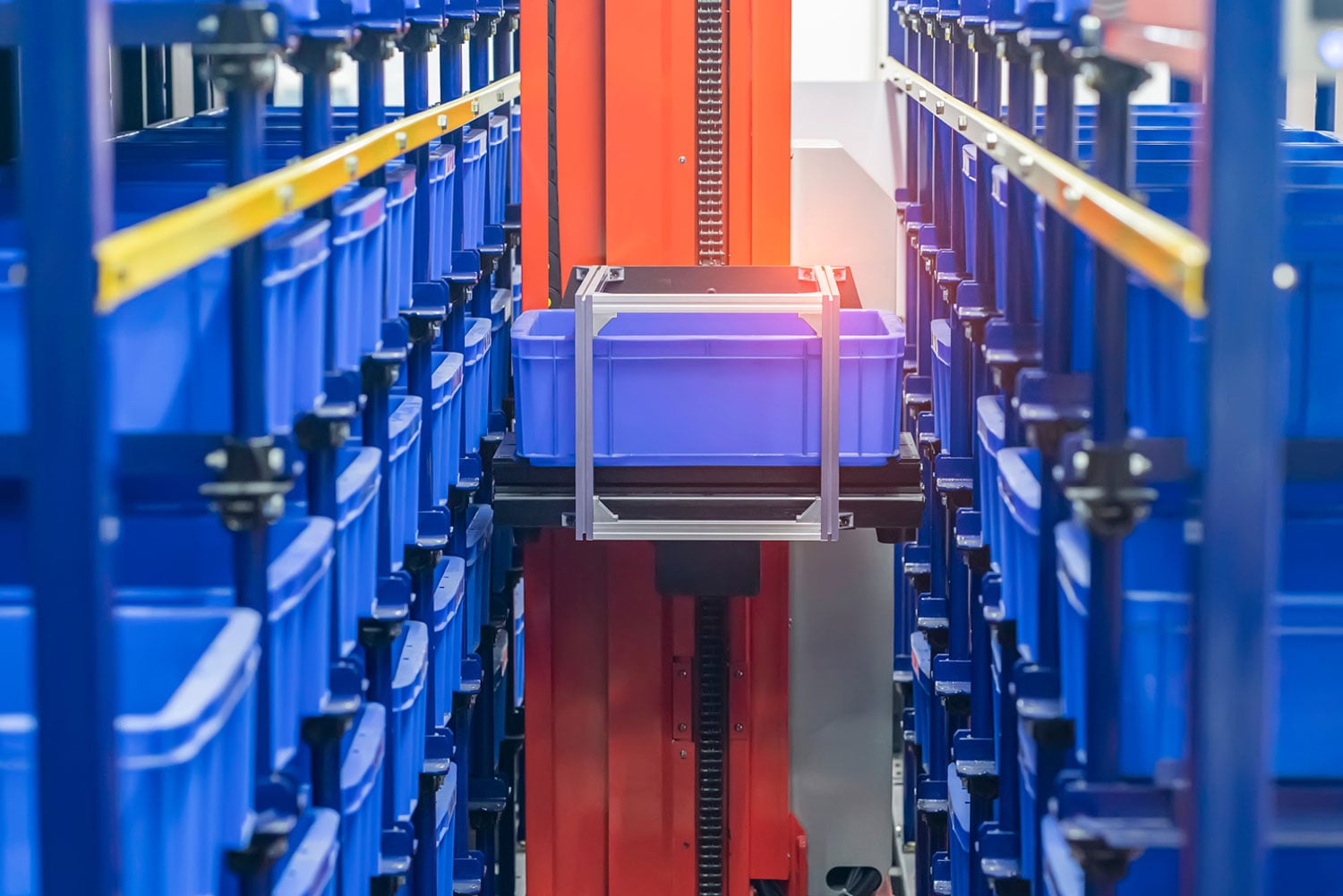
- ASRS (Automated Storage and Retrieval Systems) or conveyance and sortation might take 18-36 months but yield significantly larger long-term gains.
IndPro helps clients phase automation investment to balance near-term wins with long-term strategy. We believe ROI isn’t just about what you buy – it’s about how you buy, and when.
Common Pitfalls: Why Some Automation Projects Fail to Deliver ROI
We’ve seen it too often: companies install cutting-edge technology but see no performance improvement. The reasons are usually avoidable:
- Poor integration with WMS/WCS software
- Unrealistic implementation timelines
- Inadequate staff training
- Lack of baseline KPIs to measure improvement
At IndPro, we mitigate these risks by owning the implementation process end-to-end. Our teams are senior-led and results-focused. We don’t walk away after the install – we stay until it works.
Real-World ROI: What Success Looks Like
We’ve helped distribution centers reduce labor costs by 25%, increase storage capacity by 40%, and boost order accuracy above 99.8%. But perhaps the most valuable ROI metric is confidence: knowing your system can scale without chaos.
Here’s what ROI looks like in practice:
- A regional distributor deploys AMRs for picking, reducing 3 shifts down to 2, while increasing output by 15%.
- A manufacturer installs a vertical lift module (VLM) to handle slow-moving inventory, freeing up 2,000 sq ft of floor space and eliminating forklift travel in that zone.
- A 3PL integrates label automation and cartonization logic into their WMS, reducing manual rework and cutting packing time per order by 22%.
These aren’t future predictions – these are real results. And IndPro has delivered them.
Make the Case: How to Present ROI Internally
Even when the math works, automation projects can stall without stakeholder alignment. Here are some ways to frame your business case:
- Speak the CFO’s language: Focus on savings, margin impact, and scalability.
- Mitigate risk: Show pilot success stories, highlight vendor track record (that’s where IndPro shines), and plan for phased deployment.
- Align with company strategy: Link ROI to goals like customer experience, growth readiness, or digital transformation.
We frequently support our clients in boardroom conversations, arming them with the data and strategy to win support from executives.
Get in Touch: Stop Calculating ROI, Start Engineering It.
Here’s the truth about ROI: it’s not a one-time calculation. It’s a lifecycle metric.
The best-run facilities don’t automate once and walk away – they build systems that evolve. They track KPIs continuously, refine their flows, and expand with confidence. That mindset turns automation from a capital project into a competitive advantage.
At IndPro, we don’t just install systems – we build partnerships that grow with you. We engineer solutions for real operations, deliver measurable ROI, and stay accountable for results.
Ready to move from a one-time capital project to a continuous, evolving competitive advantage? Let’s build an automation system with guaranteed, measurable results and an accountable partnership. Contact an automation expert today to schedule your measurable ROI consultation.
IndPro Services
IndPro helps companies make smarter automation decisions by engineering end-to-end systems with provable ROI. We don’t lead with tech – we lead with strategy, backed by decades of operational experience and a reputation for follow-through.
Whether you’re building a business case or refining an existing system, we’ll meet you at any stage – and we’ll deliver.
Automate. Evolve. Succeed.
Hands-on leadership. Accountable partnerships. Measurable results.