August 24th, 2026
9 min readCase Picking vs. Each Picking: Matching Automation to the Order Profile
Discover how matching warehouse automation to your specific case and each picking order profiles optimizes material flow and boosts throughput.
Case picking and each picking demand very different automation requirements.
Case picking moves complete cartons or cases. Each picking, also called piece picking, requires individual units to be selected from inventory and assigned to an order. Once the handling unit changes, so do the demands on storage, labor, replenishment, transportation, controls, and downstream processing.
That is why equipment should never be the starting point.
A conveyor may be the right answer for consistent case flow. Goods-to-person automation can reduce travel in the right each-pick environment. Mobile robotics may provide flexibility where fixed infrastructure is less practical. None of those technologies should be selected until the order profile and operating constraints are understood.
At IndPro, we start with how the operation actually fulfills orders. The technology decision comes after the material flow, labor requirements, inventory characteristics, and performance goals are clear.
Executive Summary
Case picking demands efficient movement to minimize touches, while each picking prioritizes precise inventory presentation and ergonomic workstation design. Operations handling both profiles should avoid forcing one uniform automation strategy. Instead, combine distinct, profile-tailored technologies under a unified material flow strategy to maximize overall throughput, efficiency, and accuracy across fulfillment.
Key Takeaways
- Case picking relies primarily on efficient carton movement and flow.
- Each picking prioritizes SKU access, travel reduction, and order execution.
- Mixed operations benefit from segmenting profiles while coordinating downstream flows.
- Start with the order profile, not the equipment.
- Case picking is primarily a material flow challenge.
- Each picking changes the automation priorities.
- Replenishment has to support the picking strategy.
- Mixed case and each picking requires deliberate segmentation.
- Evaluate the complete process before making the investment.
- Choosing the right automation for the picking profile.
- Get in Touch
Start with the order profile, not the equipment.
A picking system should be designed around demand.
That requires more than annual order volume. Order lines, units per line, cases per order, SKU velocity, peak demand, inventory depth, replenishment frequency, and product variability all influence the design.
Two operations can move similar annual volume and still require completely different systems.
One may ship a relatively small number of order lines with several full cases per line. Another may process a much larger number of lines containing one or two individual units. The total volume can look similar on paper, but the labor, storage, and handling requirements are not.
Product characteristics add another layer. Dimensions, weight, packaging condition, fragility, and handling consistency can determine whether a product moves reliably through conveyor, automated storage, mobile equipment, or robotic handling.
Before selecting technology, determine where the operation is actually losing time and capacity. The constraint may be picking, but it can just as easily be replenishment, transportation, consolidation, or a downstream process that cannot keep pace.
That distinction should be understood before equipment is selected.
Case picking is primarily a material flow challenge.
In case picking, the handling unit is already packaged for movement. That creates opportunities to simplify the process.
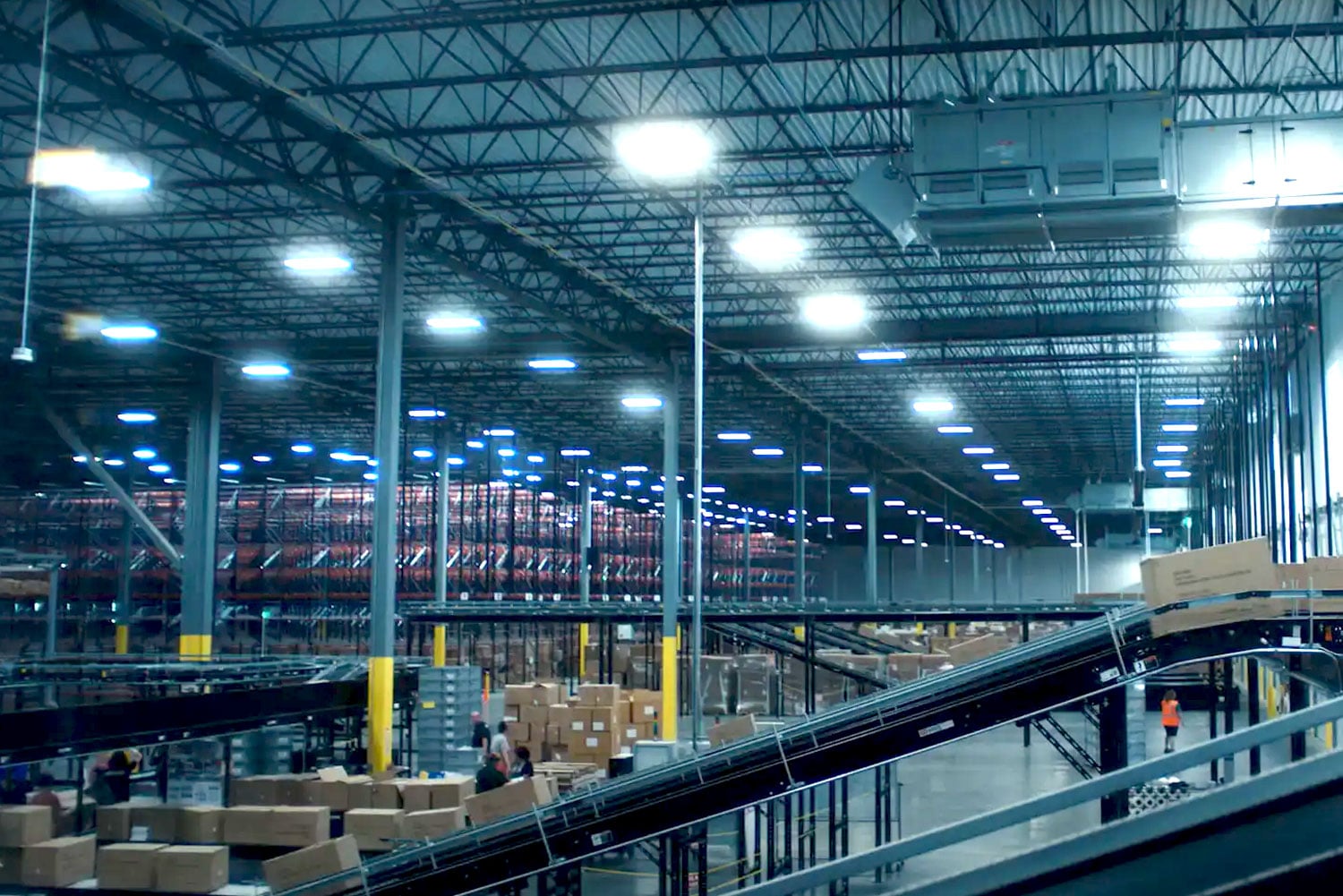
Cases may be selected from pallet rack, carton flow, pallet flow, shelving, or other storage configurations and then move toward pallet building, consolidation, sortation, or shipping.
Conveyor can be effective where case movement is consistent enough to justify fixed transportation. Instead of having operators pick a case and manually move it to the next area, the conveyor handles transportation while the operator remains focused on selection.
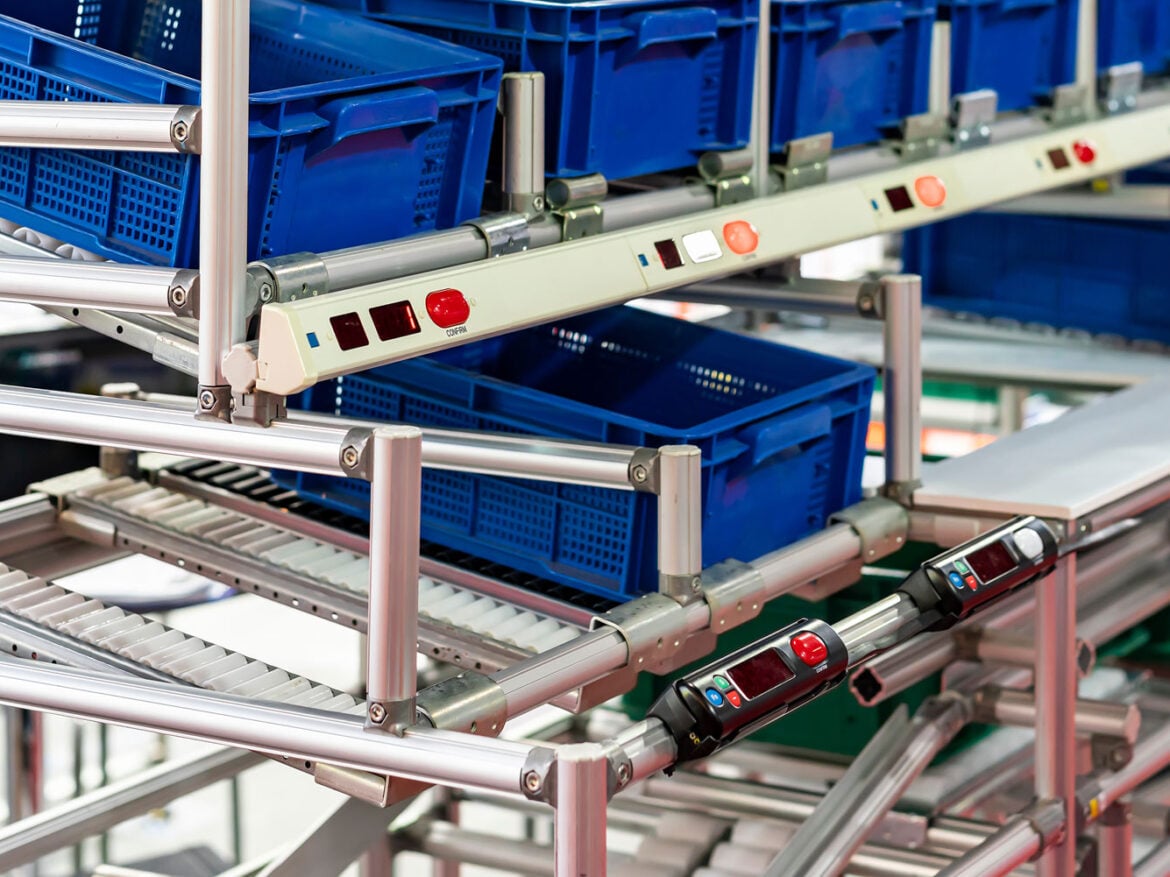
Flow storage can support the same objective by presenting product at the pick face while allowing replenishment from a separate position. This can reduce interference between picking and restocking while keeping the active work area organized.
Autonomous Mobile Robots, or AMRs, offer another option when routing flexibility is more important than a fixed path. Depending on the application, they may move cases, totes, carts, or other loads between processes.
Robotic handling may also fit repetitive activities such as depalletizing, case transfer, or pallet building when the product profile is suitable.
The critical issue is not how quickly one piece of equipment can move a case. It is whether the complete process can absorb that movement without creating another bottleneck.
Each picking changes the automation priorities.
Each picking requires more interaction between the inventory and the person or system completing the order.
The process has to present the correct SKU, identify the required quantity, complete the pick, confirm the transaction, and keep the remaining inventory available for future demand.
Travel can quickly become one of the largest sources of nonproductive time.
That is why goods-to-person automation is often evaluated for each-pick operations. Automated Storage and Retrieval Systems, or ASRS, shuttle systems, cube-based storage, carousels, and related technologies bring inventory to the operator instead of sending the operator through storage.
AMRs can reduce travel through a different architecture. Depending on the system, robots may move totes, carts, inventory, or orders while allowing more of the existing storage arrangement to remain intact.
In many operations, simpler technology is the better decision.
Pick-to-light, voice-directed picking, scanning, and workstation displays can improve direction and confirmation without requiring a major change to the storage system. Robotic piece picking may be appropriate where product presentation, vision, gripping, and exception handling can be managed consistently.
Workstation speed should never be evaluated by itself. A fast picking station provides little benefit if inventory does not arrive on time, exceptions take too long to resolve, or completed orders cannot leave the area efficiently.
Replenishment has to support the picking strategy.
Picking receives most of the attention because it is where the customer order is assembled. Replenishment is less visible, but it often determines whether the process can maintain its expected rate.
Case-picking zones need product available at the pick face before the operator arrives. Each-picking systems need the correct SKUs available in forward locations, totes, trays, or automated storage positions when demand occurs.
If replenishment cannot keep pace, faster picking simply exposes the shortage sooner.
The design therefore needs to account for reserve inventory, replenishment triggers, access paths, labor requirements, inventory depth, and the timing of replenishment activity.
This becomes particularly important when the same inventory supports multiple fulfillment profiles. Full cases may be required for direct shipment while also supplying inventory to an each-pick process.
A well-designed system plans for both demands instead of treating replenishment as a separate warehouse function.
Mixed case and each picking requires deliberate segmentation.
Many distribution operations handle both full-case and each-pick demand.
Trying to force both profiles through one identical workflow can add touches, consume labor, and create complexity without improving performance.
A better approach is often to segment inventory and demand according to how the product is actually ordered.
Full-case demand may remain in a process designed around efficient carton movement. Each-pick demand may use goods-to-person, mobile, or directed-picking processes built around unit-level access and confirmation.
Those flows can merge later where it makes operational sense, such as consolidation, packing, sortation, pallet building, or shipping.
The challenge is making sure the separate processes still operate as one fulfillment system.
Shared downstream equipment must support the combined demand. Controls and software need to coordinate order flow. Replenishment must support both profiles. Exceptions need to be handled without disrupting the surrounding operation.
Hybrid automation works best when the technologies are engineered together rather than treated as independent projects.
Evaluate the complete process before making the investment.
Picking technology is often evaluated by the rate of a workstation, robot, conveyor, or storage system. Those numbers matter, but they do not define overall warehouse performance.
Inventory still has to be stored, replenished, released, picked, transported, consolidated, packed, and shipped.
A limitation anywhere in that sequence can determine the actual output of the system.
Sometimes the constraint has nothing to do with the picking technology.
A redesigned forward-pick area may reduce travel. Better replenishment may increase the productive time of existing stations. Automated transportation may allow operators to remain in their zones. Separating case and each demand may simplify a process that has become unnecessarily complicated.
IndPro evaluates picking within the complete material flow. Equipment, controls, software, labor, storage, replenishment, and downstream processes all need to support the same operating requirement.
The equipment only works as well as the operation around it.
Choosing the right automation for the picking profile.
Case picking and each picking ultimately have the same objective: move the correct product into the correct order. The engineering required to accomplish that efficiently is different.
Case picking generally benefits from predictable movement, reduced handling, reliable inventory availability, and balanced downstream capacity.
Each picking depends more heavily on SKU access, inventory presentation, travel reduction, confirmation, and workstation execution.
IndPro helps manufacturers, retailers, distributors, and third-party logistics providers evaluate these requirements before technology is selected. We help define the strategy, engineer the system, integrate the appropriate technologies, coordinate implementation, and remain accountable for how the complete solution performs.
The goal is not to install the most automation. It is to apply the right automation to the right work and create a fulfillment system that can perform reliably as operational requirements change.
Get in Touch: Build a scalable fulfillment strategy.
Aligning warehouse automation with your specific order profile transforms isolated equipment into an integrated, high-throughput fulfillment system. Whether optimizing case picking for efficient carton movement, streamlining each picking to reduce travel, or segmenting hybrid workflows, success relies on engineering the complete material flow rather than selecting technology in a vacuum.
To eliminate bottlenecks and optimize your overall process, reach out to our integration specialists today.
IndPro Services
Since 1990, IndPro has provided expert robotics and automation integration for manufacturing, fulfillment, warehousing, and distribution operations nationwide. Holding an active GSA Contract, we deliver senior-led technical execution and system lifecycle support to commercial industry leaders as well as US military and government entities. From advanced robotic integration to software orchestration and network stabilization, IndPro converts complex automation into reliable, high-throughput operations.
Automate. Evolve. Succeed.
Hands-on leadership. Accountable partnerships. Measurable results.