November 17th, 2025
5 min readHow WMS and WCS Integration Powers Smarter Fulfillment
When WMS and WCS operate as one, fulfillment shifts from reactive to predictive, creating smoother flow, sharper visibility, and performance gains you can feel every day.
Fulfillment Today Demands More Than Software Silos
Warehouse operations in 2025 are under more pressure than ever. Between rising customer expectations, SKU complexity, labor volatility, and the pace of e-commerce, standing still is no longer an option. But automation alone isn’t the solution. Real efficiency comes when your software ecosystem – specifically your WMS and WCS – works as a single, orchestrated system. Fulfillment success depends not only on having the right tools but on having those tools communicating and aligned in real time.
How WMS and WCS Integration Powers Smarter Fulfillment
- WMS: The Brains Behind Inventory Logic
- WCS: The Execution Engine of Automation
- What True WMS–WCS Integration Really Means
- End-to-End Visibility Through Unified Warehouse Software
- Operational Risks of Disconnected Warehouse Systems
- Why Fulfillment Strategy Must Drive System Architecture
- Automation Without Orchestration Is Just Faster Chaos
- Get in Touch: Your Integration Partner Behind the Curtain
WMS: The Brains Behind Inventory Logic
The Warehouse Management System (WMS) is the strategic hub of any distribution center. It tracks inventory across locations, manages inbound receipts, directs putaway, assigns picks, and governs outbound orders. It determines which SKU goes where, who picks it, and when. But despite its critical role in inventory logic, the WMS doesn’t control automation hardware. It’s not built to handle split-second decisions like where to divert a tote or how to reroute a conveyor. That’s where the WCS takes over.
WCS: The Execution Engine of Automation
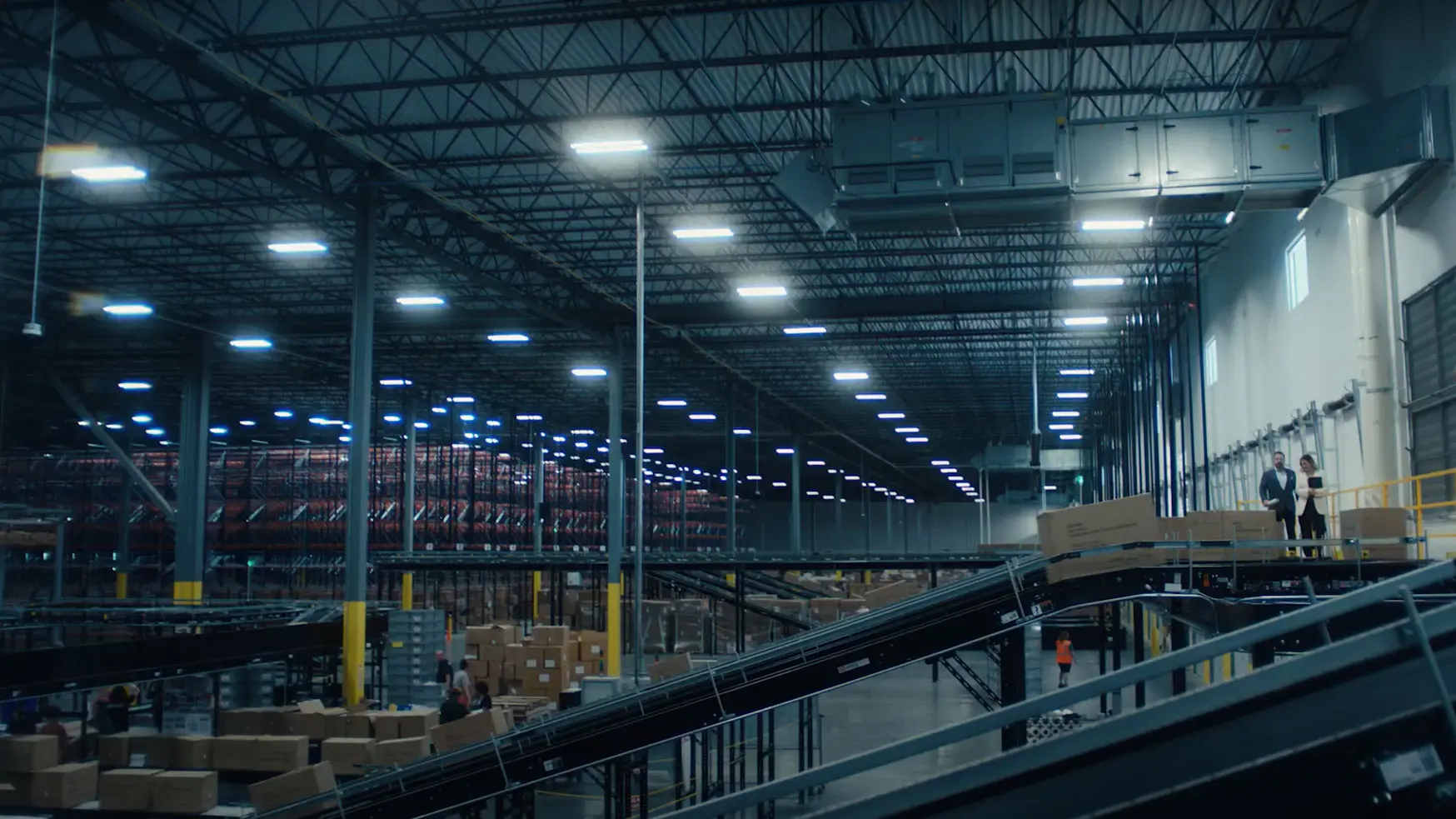
A Warehouse Control System (WCS) bridges the gap between strategic decisions and physical execution. It manages conveyors, sorters, autonomous mobile robots, shuttles, palletizers, and print-and-apply systems. Where the WMS tells you what needs to happen, the WCS makes it happen at the speed of your equipment. At IndPro, our WCS platform is already driving large-scale fulfillment operations for nationally recognized brands. These systems are handling tens of thousands of daily orders with precision, flexibility, and uptime that would be impossible without a tightly integrated backbone.
What True WMS–WCS Integration Really Means
It’s common to hear that a WMS and WCS “talk” to each other, but in many cases, that just means exchanging basic messages. True integration goes further – it ensures that both systems operate with a shared view of warehouse logic and execution priorities. For example, if a WMS releases a pick wave, the WCS shouldn’t just react. It should anticipate lane assignments, prioritize equipment queues, and adapt in real time as volume surges or exceptions occur. IndPro specializes in building that level of orchestration from day one.
End-to-End Visibility Through Unified Warehouse Software
With tight WMS/WCS integration, operators gain end-to-end visibility over their fulfillment flow. Managers can spot blockages, rebalance picking zones, reassign tasks, and make smarter labor decisions, all from a single dashboard. Real-time responsiveness becomes possible, not theoretical. For our clients, that translates directly into reduced dwell times, faster dock turns, and smoother peak handling. When software and automation move as one, the warehouse flows instead of fights itself.
Operational Risks of Disconnected Warehouse Systems
When your systems don’t talk, the warehouse pays for it. You see it in the conveyor line backing up because tote routing lags the WMS. You see it when the AMRs sit idle, waiting for direction. You see it in the manual workarounds required to correct misrouted inventory. These are not edge cases; they’re daily inefficiencies that bleed profitability. Disconnected software doesn’t just slow down the operation – it creates new points of failure. IndPro has stepped into many facilities where the automation was capable, but the control systems weren’t aligned. The result? Underutilized assets and constant firefighting.
Why Fulfillment Strategy Must Drive System Architecture
WMS/WCS integration is not about software features – it’s about fulfillment strategy. IndPro doesn’t treat system deployment like a shopping list. We approach every project by understanding the process flow, pain points, growth trajectory, and fulfillment profile of the facility. From there, we architect WMS and WCS systems to support that flow seamlessly. Whether you’re managing high-SKU omni-channel fulfillment or just trying to tame wave picking, the alignment of software and machinery is non-negotiable.
Automation Without Orchestration Is Just Faster Chaos
We’ve seen what happens when a facility installs world-class automation but fails to integrate its control layers. The hardware moves faster – but the problems move faster too. Inventory ends up in the wrong place, labor spends its time on rework, and reporting becomes guesswork. Without unified orchestration between your WMS and WCS, automation just accelerates existing dysfunctions. That’s why at IndPro, our first priority is building systems that work together by design, not just by connection.
Get in Touch: IndPro, your integration partner behind the curtain.
Our clients include some of the most recognized retail and e-commerce brands in North America. What they have in common is a need for scalable fulfillment systems that work. IndPro delivers that by engineering alignment across the software and mechanical stack. We don’t just hand you a control system and walk away – we own the outcome.
With our team, you get senior-level expertise, field-proven WCS platforms, and strategic integration that ensures your WMS, WCS, and warehouse operations move as one. That’s how you reduce labor strain, increase order accuracy, and prepare your operation for what’s next.
A smarter, more synchronized fulfillment operation starts with unifying your WMS and WCS. Connect with an automation expert today and explore how true integration can transform your facility
IndPro Services
IndPro helps companies make smarter automation decisions by engineering end-to-end systems with provable ROI. We don’t lead with tech – we lead with strategy, backed by decades of operational experience and a reputation for follow-through.
Whether you’re building a business case or refining an existing system, we’ll meet you at any stage – and we’ll deliver.
Automate. Evolve. Succeed.
Hands-on leadership. Accountable partnerships. Measurable results.