September 8th, 2025
8 min readTop Robotics Trends Reshaping Warehouse Automation in 2025
A clear trend is emerging: warehouses are shifting from manual workflows to AI-driven robotics, making integrated, outcome-focused strategies essential as labor shortages and rising demand push operations to adapt.
Warehouses Are Reaching a Robotics Tipping Point
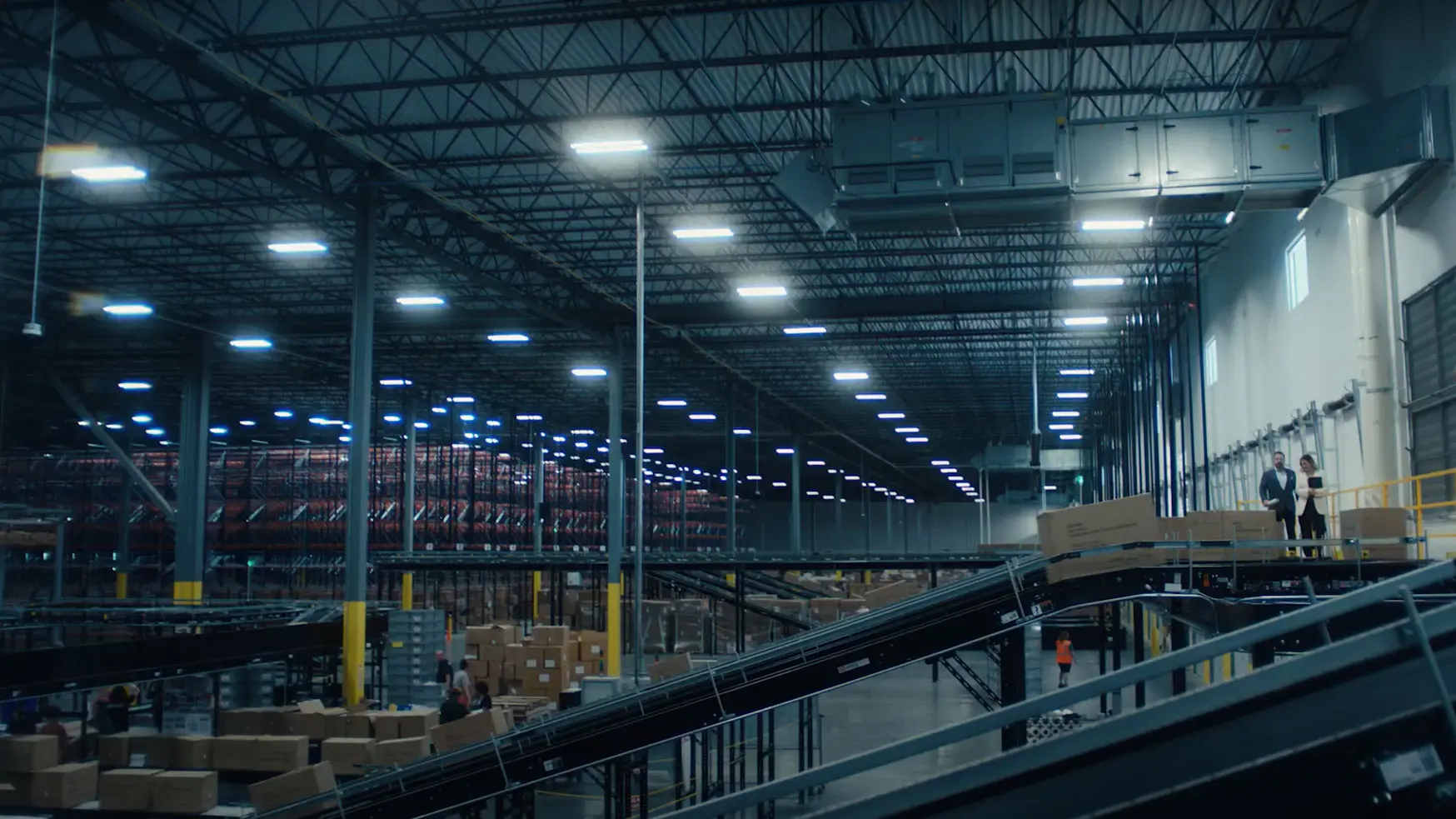
Warehousing and distribution are under more pressure than ever, and 2025 has become a turning point. With labor shortages deepening, SKU counts rising, and customer demands accelerating, facilities are facing a tough truth: traditional processes can’t keep up. Robotic automation is no longer a futuristic investment for multinationals — it’s a strategic tool for operations of all sizes. What once seemed risky or excessive is now becoming essential. But knowing where to start, what to deploy, and how to scale requires more than buying hardware — it requires a plan grounded in operational outcomes.
From autonomous mobile robots (AMRs) that move dynamically across pick zones to robotic palletizers that reduce dock congestion, the technologies are mature, available, and proven. But it’s not just about the tech – it’s about integration, orchestration, and timing.
These trends are reshaping what’s possible and how fast facilities can adapt.
Top Robotics Trends Reshaping Warehouse Automation in 2025
- AI-Powered AMRs Are No Longer Just a Luxury
- Goods-to-Person Robotics Are Gaining Ground
- Robotic Palletizers Are Reducing Injury and Improving Flow
- Robotic Systems Are Adapting to Brownfield Environments
- Software Is Now the Real Enabler of Robotics ROI
Final Thought: Strategic Robotics Begins with the Right Partner
Trend 1: AI-Powered AMRs Are No Longer Just a Luxury
AMRs are filling the void left by labor gaps.
Autonomous mobile robots have come a long way in a short time. Early AMRs followed set paths and struggled in complex environments. In 2025, that’s changed. Today’s AMRs are equipped with AI-driven navigation, vision systems, and onboard learning capabilities. They reroute in real time, detect human movement, and dynamically prioritize tasks based on input from warehouse software systems.
These smart machines are filling the void left by labor gaps, especially in receiving, putaway, and picking areas. Unlike conveyor systems, AMRs offer flexibility – they can be rerouted, redeployed, or scaled up quickly without major infrastructure changes. For warehouses with shifting order profiles or seasonal peaks, this adaptability is gold. And they’re not limited to greenfield sites; AMRs are successfully navigating older facilities, mixed-mode environments, and multi-zone workflows with increasing ease.
Trend 2: Goods-to-Person Robotics Are Gaining Ground
G2P outperforms traditional pick zones while using less floor space and improving order accuracy.
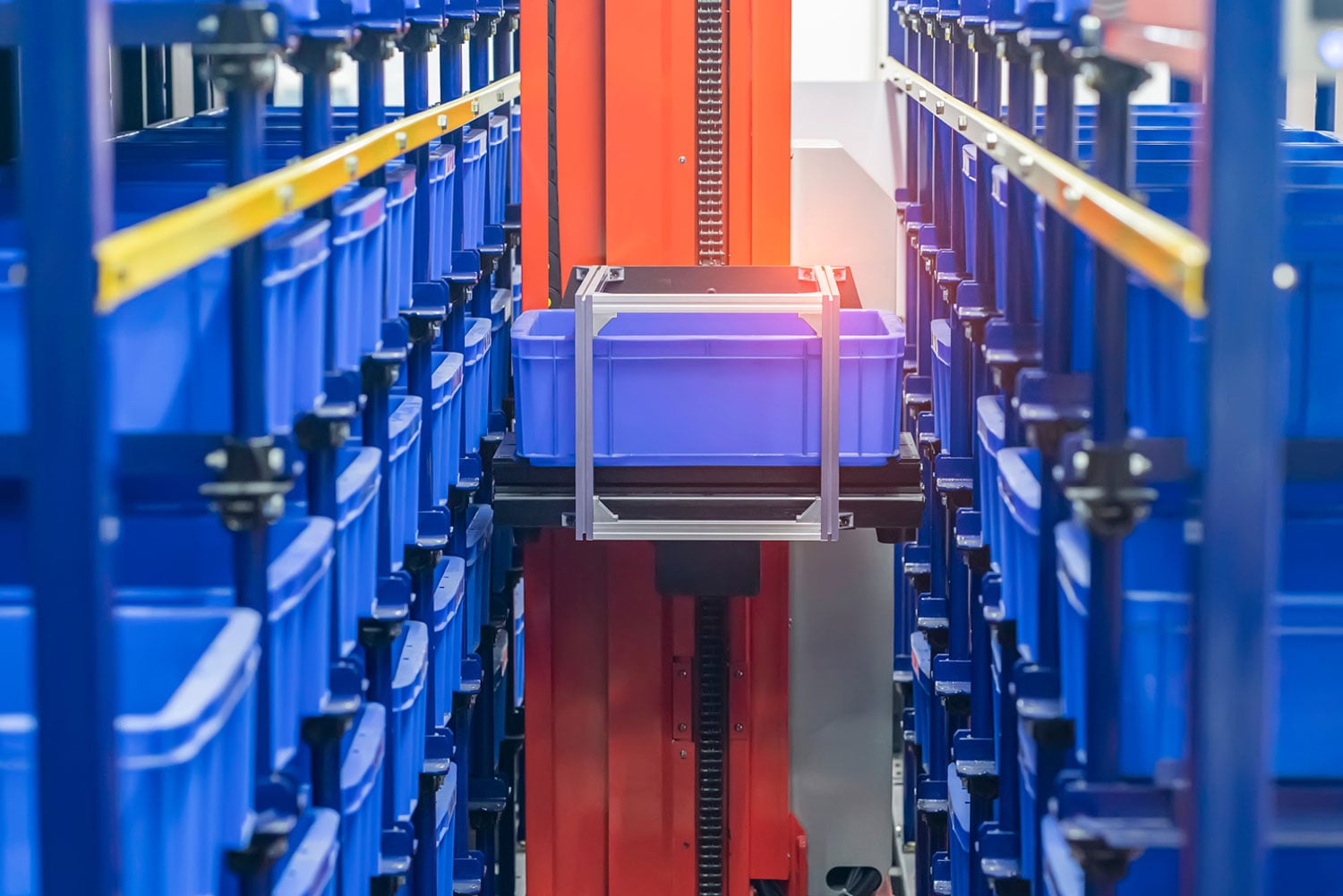
One of the most significant trends in robotics today is the move toward goods-to-person (G2P) automation. These systems eliminate the need for workers to walk hundreds of yards a day, reducing both fatigue and wasted motion. Instead, robots or shuttles retrieve inventory and bring it to human operators stationed at ergonomic pick stations. This dramatically boosts pick rates, reduces error, and optimizes cubic storage.
G2P doesn’t always require a full overhaul. Solutions like vertical lift modules (VLMs), horizontal carousels, or modular cube-based systems can be implemented in phases. When designed with throughput goals in mind, these systems can outperform traditional pick zones while using less floor space and improving order accuracy. In operations where accuracy is critical – such as electronics, medical supplies, or retail fulfillment – this trend is proving transformative.
Trend 3: Robotic Palletizers Are Reducing Injury and Improving Flow
Robotic palletizers are faster, safer, and easier to reprogram.
Robotic palletizing was once confined to high-volume, high-budget distribution centers. But with falling costs and smarter software, these systems are being deployed in a much wider range of facilities. Today’s robotic palletizers are faster, safer, and easier to reprogram. They can build mixed-SKU pallets, adjust for carton variance, and align with upstream WMS instructions for order sequencing.
The operational benefits go beyond the dock. Palletizers reduce workplace injuries from repetitive lifting, cut down on staging errors, and improve truckload consistency. For facilities struggling to maintain reliable outbound flow or meet strict shipping windows, this end-of-line automation is often one of the highest-ROI moves available.
And in labor-constrained markets, a robotic palletizer can extend the performance of a single operator team—especially during peak weeks when temp labor is either unavailable or untrained.
Trend 4: Robotic Systems Are Adapting to Brownfield Environments
Robotics manufacturers are designing solutions specifically for brownfield sites.
Not every warehouse is a brand-new facility with clean lines and pristine layouts. In fact, most of the U.S. warehouse footprint is decades old. The good news? Robotics manufacturers and integrators are designing solutions specifically for brownfield sites – those older buildings with irregular layouts, low ceilings, or legacy racking.
Scalable robotics makes this adaptation possible. AMRs and ACRs (autonomous case-handling robots) can navigate tight spaces and multi-zone operations with minimal physical changes to the site. G2P systems can be deployed in corner zones or mezzanine spaces without altering core traffic flow. And robotic arms can be placed at high-volume pick or pack stations to relieve pressure, not replace teams.
This modularity allows companies to test automation in one zone, prove value, then expand. It also removes the “all or nothing” pressure that often derails automation discussions in established facilities. In 2025, the best robotics projects are the ones that fit the site, not the other way around.
Trend 5: Software Is Now the Real Enabler of Robotics ROI
The orchestration software provides is what allows systems to deliver peak performance.
Hardware gets the headlines, but software delivers the results. Without smart coordination, even the most advanced robot is just another bottleneck waiting to happen. In modern warehouses, warehouse execution systems (WES) are taking center stage. These platforms serve as the central nervous system – receiving orders, evaluating priorities, and directing robotic and human activity in real time.
WES platforms integrate with WMS and ERP systems to maintain inventory integrity while adapting workflows to what’s happening on the floor. If one AMR is delayed, the WES reroutes tasks to another. If a shift in order priority occurs, pick zones are updated without disrupting flow. This orchestration is what allows robotics to deliver peak performance – especially during high-volume cycles or sudden demand swings.
Without this software layer, robotics become siloed or underutilized. Companies who overlook the role of WES often see longer payback timelines and weaker operational improvements. Those who integrate software from day one see stronger results, faster.
The Right Way to Pilot Robotics in Your Operation
A successful robotics deployment doesn’t start with equipment – it starts with a pilot that matches your real-world operational needs. The most effective projects begin small: one process, one zone, one problem. This allows teams to measure performance, gather real data, and build confidence before scaling up.
Key to this is internal alignment. Operations, IT, and leadership must understand not just what the robot does – but what outcome it delivers. Teams should define KPIs early: cycle time, accuracy, headcount savings, or shipping velocity. Then choose a robotics solution that directly addresses those metrics.
The goal of the pilot isn’t just performance – it’s validation. When frontline workers see how robotics makes their jobs easier, they become advocates. When managers see measurable results, they champion the investment. And when expansion happens, it does so with a clear path, not guesswork.
If you want to explore what this looks like in practice, check out our case studies on phased robotics rollouts in active operations.
Final Thought: Strategic Robotics Begins with the Right Partner
Robotics in 2025 isn’t about being flashy – it’s about being strategic. The most successful warehouses aren’t the ones with the most bots; they’re the ones with the most clarity. They know what problems they’re solving, they know what success looks like, and they have a roadmap to get there.
That roadmap requires a partner – not just a vendor. Someone who understands the interplay between your floor, your software, your people, and your goals. Someone who can guide the process with accountability, not just sell you a catalog of hardware.
That’s where IndPro comes in.
Hands-on leadership. Accountable partnerships. Measurable results. All backed by IndPro Expertise.
At IndPro, we design and deliver robotic solutions that solve real operational problems. Our hands-on, senior-led teams guide clients through every phase of automation – from system design to pilot rollout to full-scale deployment. We integrate robots, software, and strategy into cohesive systems that improve accuracy, reduce cost, and scale with your business.
We’ve been doing this for decades, across industries, with measurable results. If you’re looking to bring robotics into your facility with confidence and clarity, we’re here to help.
Contact a systems integration expert today, we’re committed to helping optimize your operations and drive long-term success.
About IndPro Services
IndPro Services, a leader in Commercial Systems and U.S. Federal Government procurement, designs and executes successful, data-driven automation and robotic solutions for supply chain industries.
Dedicated to improving efficiency in warehouse and distribution center operations, we work on the same side of the table with you to procure the best possible solution, tailored to your budget and needs.
Automate. Evolve. Succeed.
Hands-on leadership. Accountable partnerships. Measurable results.