October 6th, 2025
7 min readSolving Fulfillment and Distribution Challenges with Smart Automation
Warehouses are evolving fast – bridging labor gaps and boosting throughput with smart automation that unites robotics, software, and strategy for faster, more efficient operations.
Distribution in 2025: Caught Between Pressure and Potential
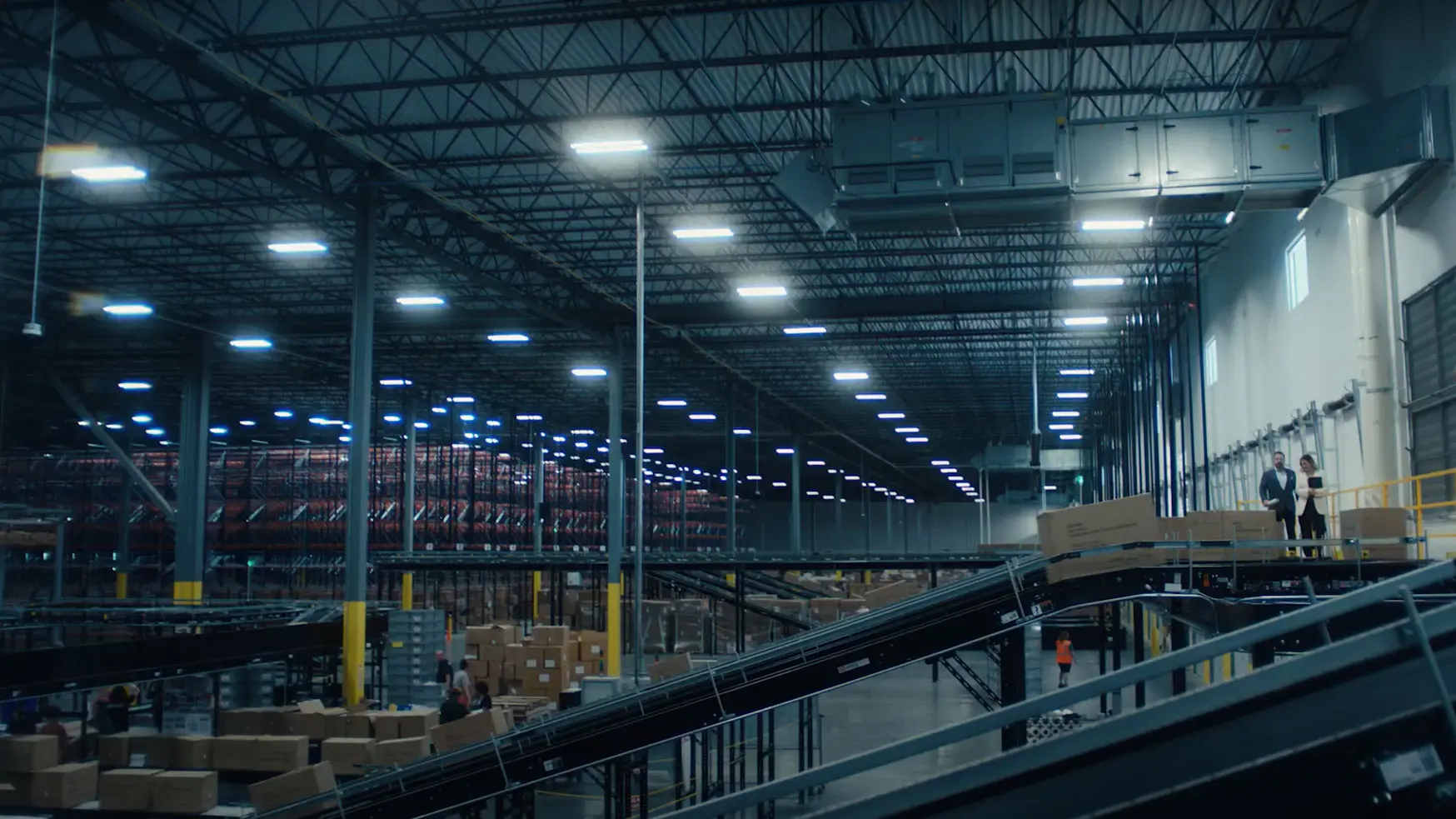
Distribution centers (DCs) are under a unique kind of pressure in 2025. With supply chain volatility, evolving customer expectations, and tightening delivery timelines, the role of the warehouse has shifted from operational back-end to strategic driver. But while demand has surged, the systems and teams supporting distribution often haven’t kept pace.
At many facilities, aging infrastructure, fragmented workflows, and unreliable labor pipelines are still the norm. And yet, expectations for same-day shipping, perfect order accuracy, and low operational cost keep rising. This disconnect between pressure and capability is where the future of smart automation – and the need to increase warehouse efficiency – is being forged.
Companies that succeed in this new environment aren’t just adding robots or software – they’re rethinking their operations entirely. They’re solving real bottlenecks with purpose-built automation that addresses labor, speed, and visibility simultaneously. At IndPro, this is exactly where we help our clients transform reactive warehouses into proactive, high-performance operations.
Solving Distribution Challenges with Smart Automation
- Challenge 1: Labor Gaps and Turnover at Every Level
- Solution: Automation That Replaces Repetition, Not People
- Challenge 2: Speed Expectations Have Outpaced Legacy Processes
- Solution: Smart Systems That Move With Demand
- Challenge 3: Data Silos Create Blind Spots in the Operation
- Solution: Integrated Automation + Visibility = Flow
- What Winning DCs Are Doing Differently in 2025
Final Thought: Engineered Automation That Delivers Real Results
Challenge 1: Labor Gaps and Turnover at Every Level
Labor shortages in distribution aren’t new – but they’re worse.
In 2025, experienced workers are aging out, and younger talent is gravitating toward roles with less physical strain and more flexibility. Seasonal labor is increasingly unreliable, temp staffing agencies are stretched thin, and onboarding times have ballooned in response to high turnover rates.
Even when facilities are fully staffed, they face constant churn. Workers burn out from repetitive lifting, long walking distances, or poor ergonomics. The cost of retraining is growing. So is the risk of injury, rework, and missed shipments.
And it’s not just warehouse floor staff. Many DCs are experiencing turnover in supervisor and technician roles as well, leaving operations vulnerable when tribal knowledge walks out the door. This instability isn’t just frustrating – it’s expensive. And it makes sustained growth nearly impossible without operational change.
Solution: Automation That Replaces Repetition, Not People
Smart automation doesn’t eliminate jobs – it makes them better. In the most successful deployments, automation targets the tasks that are physically demanding, time-consuming, or prone to error – freeing up human workers for higher-value roles.
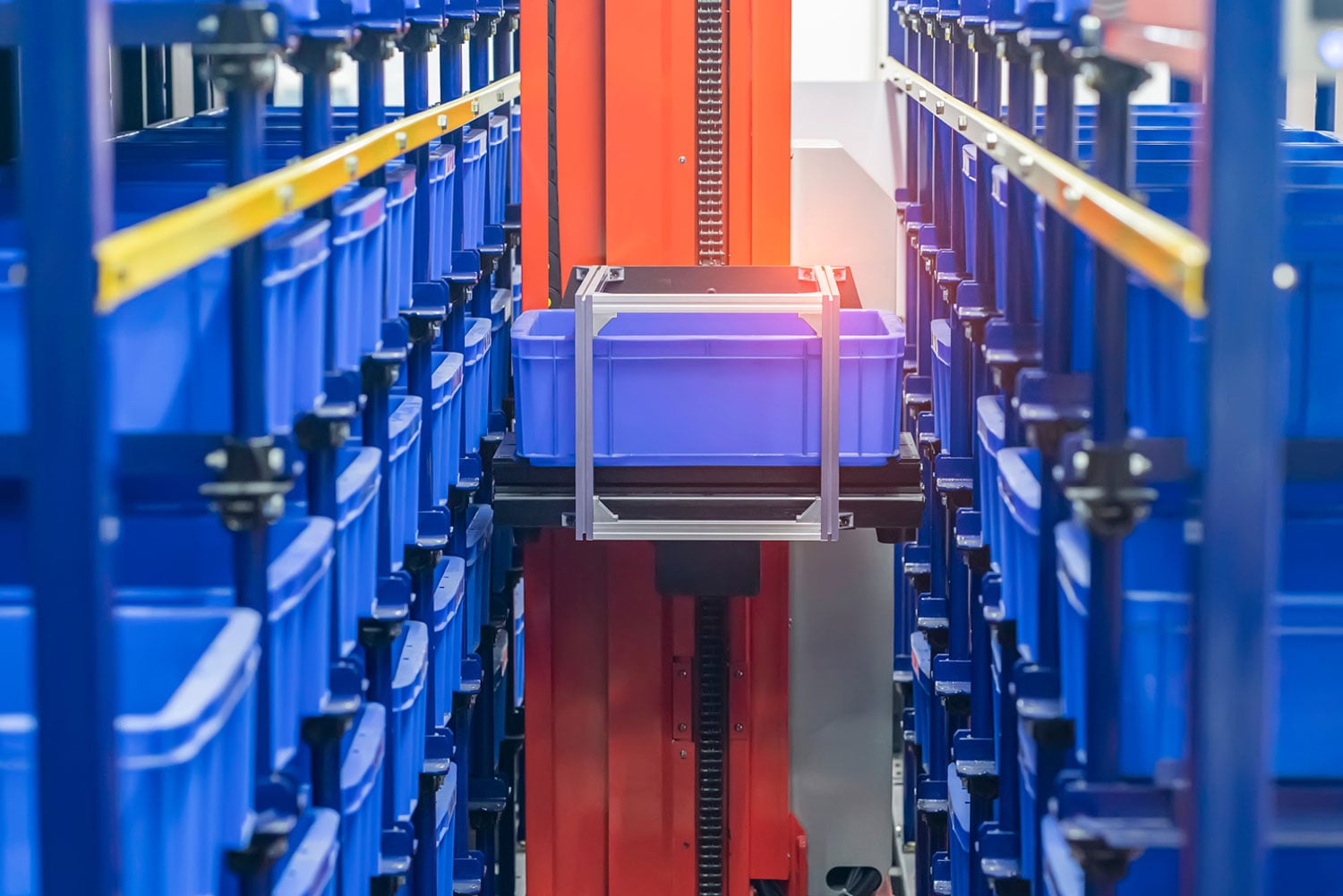
For example, autonomous mobile robots (AMRs) can handle internal transport tasks, drastically reducing the number of miles a picker needs to walk in a shift. Robotic labelers and sorters ensure consistency without fatigue. Automated storage and retrieval systems (ASRS) reduce lifting injuries by bringing totes or cartons directly to ergonomic pick stations.
At IndPro, we’ve helped clients reallocate teams into higher-impact roles – moving experienced staff into positions like system supervision, exception handling, and proactive maintenance. These upgrades reduce turnover and improve job satisfaction in real, measurable ways.
Challenge 2: Speed Expectations Have Outpaced Legacy Processes
Next-day delivery has become the standard. Same-day is becoming more common.
Retailers, e-commerce platforms, and end customers expect tighter shipping windows, lower error tolerance, and greater SKU flexibility than ever before.
And yet, many DCs are still using manual paper processes, zone-picking models designed a decade ago, or outdated conveyor systems that can’t scale with real-time demand. This results in missed cutoffs, late shipments, and bottlenecks that spike during promotional or seasonal surges.
Speed isn’t just about how fast you move – it’s about how fast you can adapt. Without dynamic systems, operations become rigid. And rigidity in 2025 means risk.
Solution: Smart Systems That Move With Demand
Automation technologies today are designed for adaptability. AMRs reroute dynamically based on traffic and task load. High-speed sortation systems can reprioritize based on real-time WMS data. ASRS platforms can prioritize fast-moving SKUs during peaks, while still maintaining storage density.
More importantly, these systems scale. A modular design lets you increase throughput without a full system redesign. Adding more robots or extending a pick mezzanine doesn’t require a six-month project. In many cases, it’s a matter of software adjustments and plug-and-play hardware additions.
IndPro often designs these phased automation rollouts for clients looking to future-proof their DCs. Instead of massive up-front overhauls, we help create modular roadmaps that allow technology to grow with the business.
Challenge 3: Data Silos Create Blind Spots in the Operation
When data is siloed, managers operate reactively instead of proactively.
In a typical DC, dozens of systems are running in parallel – warehouse management systems (WMS), warehouse control systems (WCS), labor management, ERP, transport systems, even spreadsheets. The problem? They don’t always talk to each other in real time.
This creates operational latency. A pick error might not be caught until packing. A stockout might not be flagged until after an order is committed. An idle sorter might sit unused because the upstream system hasn’t communicated a task. These blind spots cost time, money, and trust.
When data is siloed, managers operate reactively instead of proactively. And that creates systemic drag – especially in fast-moving, high-SKU operations.
Solution: Integrated Automation + Visibility = Flow
Smart automation is powerful on its own. But when connected to real-time data orchestration tools, it transforms how the entire warehouse functions.
For example, WES (warehouse execution systems) now act as the central intelligence layer—gathering data from WMS, robotics, conveyors, and labor systems to optimize in-the-moment decisions. This includes rerouting AMRs, prioritizing hot orders, allocating pickers to high-velocity zones, or pushing alerts when a bottleneck emerges.
With this kind of visibility, operations leaders can shift from firefighting to flow management. They gain accurate insight into what’s happening now—not 15 minutes later. This allows for true optimization—not just automation.
IndPro’s integration teams specialize in bridging these systems—so that automation isn’t just mechanical, but intelligent, responsive, and measurable.
What Winning DCs Are Doing Differently in 2025
The distribution centers seeing the most success with automation in 2025 aren’t the ones throwing money at the latest gadgets. They’re the ones who are methodical, phased, and strategic.
They start with one challenge, build a pilot, and validate results. They train teams across functions – not just to use automation, but to manage and scale it. They choose technologies that integrate, not isolate. And they measure success with KPIs that matter – throughput per hour, cost per order, error rates, and labor stability.
More importantly, they align their automation investments with business strategy – not just warehouse efficiency. That means understanding how fulfillment performance affects customer experience, brand reliability, and long-term growth potential.
At IndPro, we’ve helped clients chart these journeys across every phase – from initial diagnostics and ROI modeling to implementation and scaling.
They don’t just automate – they evolve.
Final Thought: Engineered Automation That Delivers Real Results
At IndPro, we specialize in solving real-world distribution challenges with engineered automation. Whether you’re facing labor shortages, throughput bottlenecks, or outdated systems, our senior-led teams design solutions that deliver measurable outcomes – not just flashy upgrades.
With decades of experience in warehouse and distribution environments, we help clients rethink what’s possible – leveraging the right blend of software, robotics, and strategy to improve accuracy, speed, and scalability.
We don’t just install equipment. We build roadmaps. We roll up our sleeves. And we stay accountable from concept to completion.
Ready to take the next step? Contact a systems integration expert today to start building your automation roadmap with confidence.
About IndPro Services
IndPro Services, a leader in Commercial Systems and U.S. Federal Government procurement, designs and executes successful, data-driven automation and robotic solutions for supply chain industries.
Dedicated to improving efficiency in warehouse and distribution center operations, we work on the same side of the table with you to procure the best possible solution, tailored to your budget and needs.
Automate. Evolve. Succeed.
Hands-on leadership. Accountable partnerships. Measurable results.